
Last updated November 22, 2026
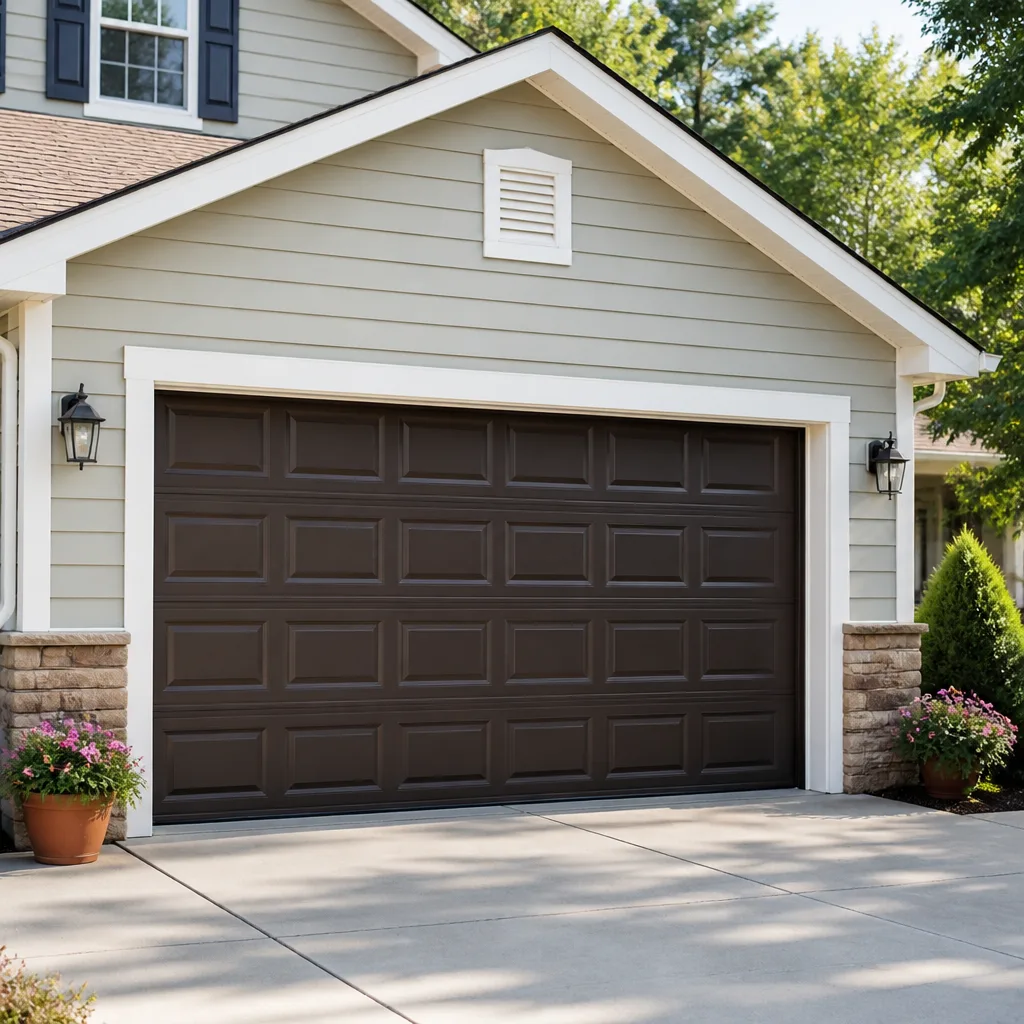 Raised-panel steel
 Carriage house
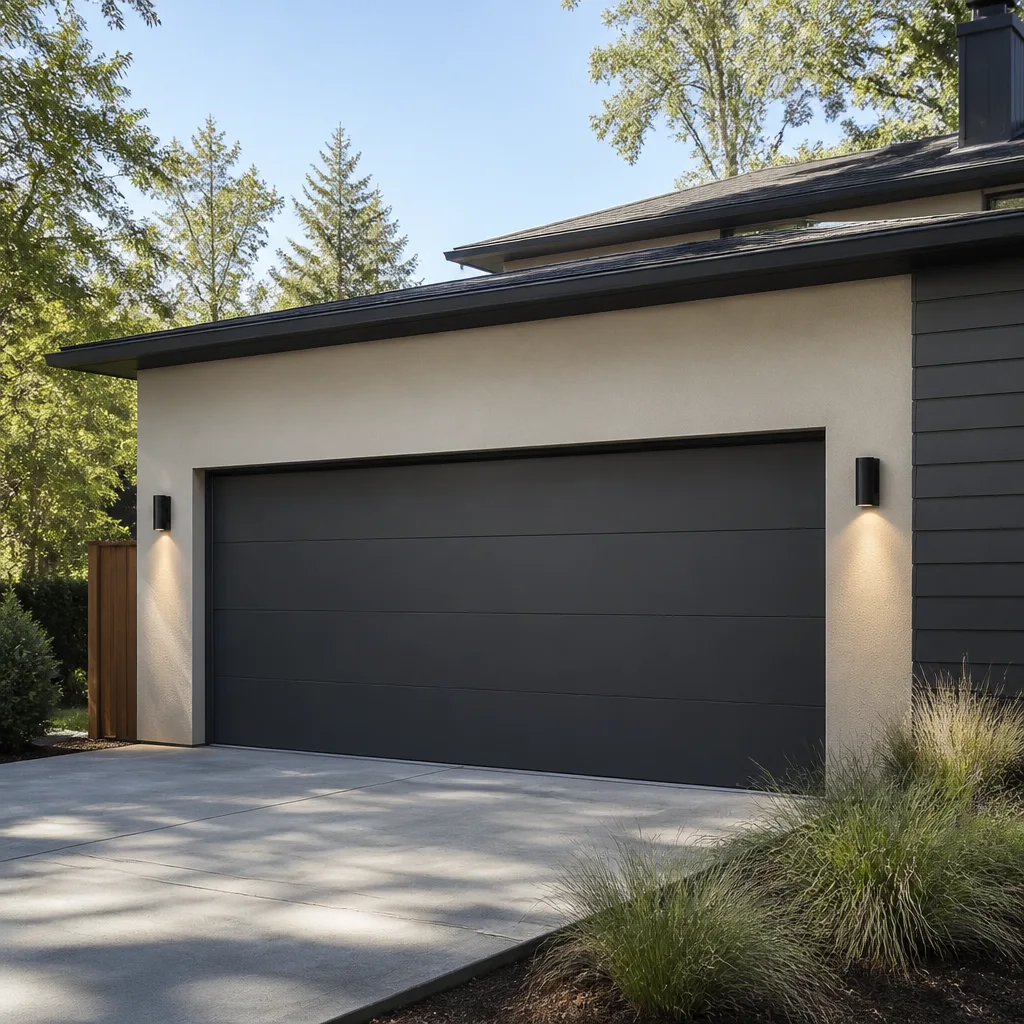 Modern flush
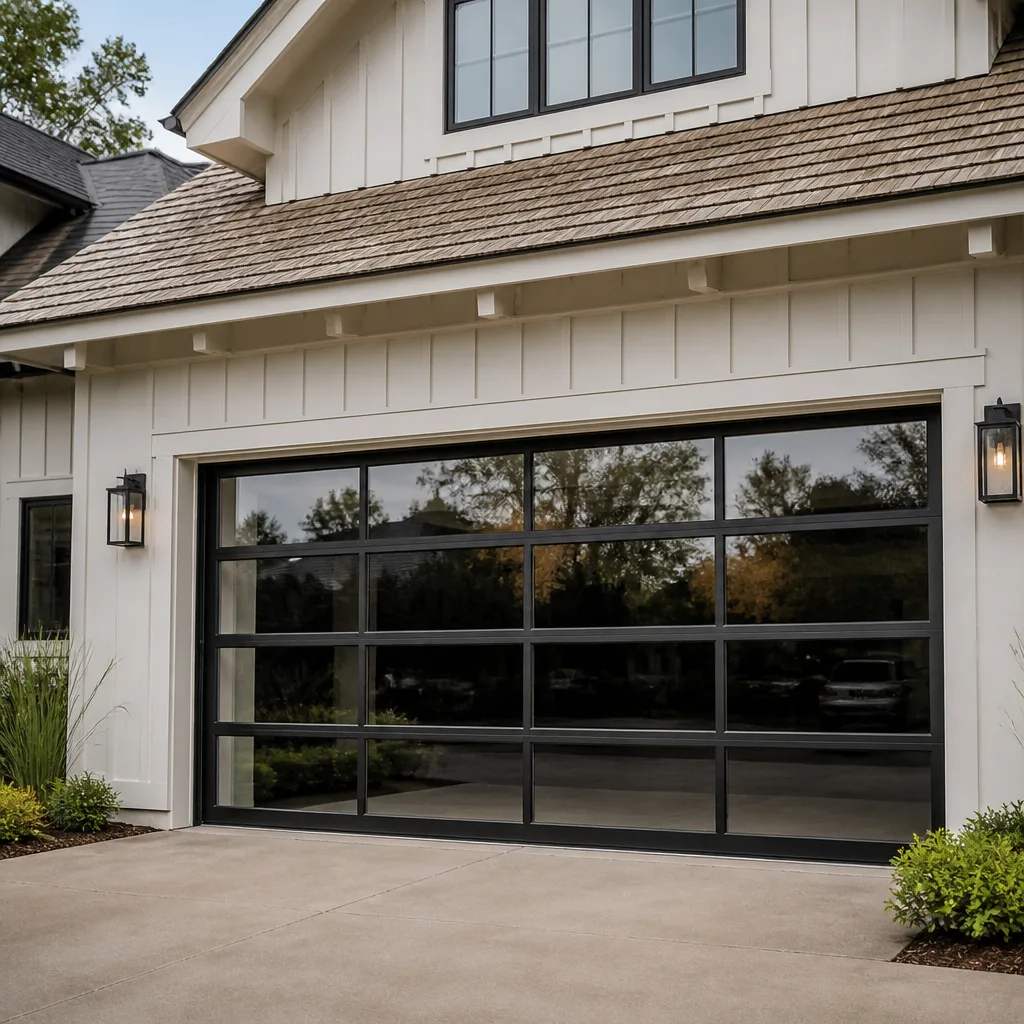 Full-view glass
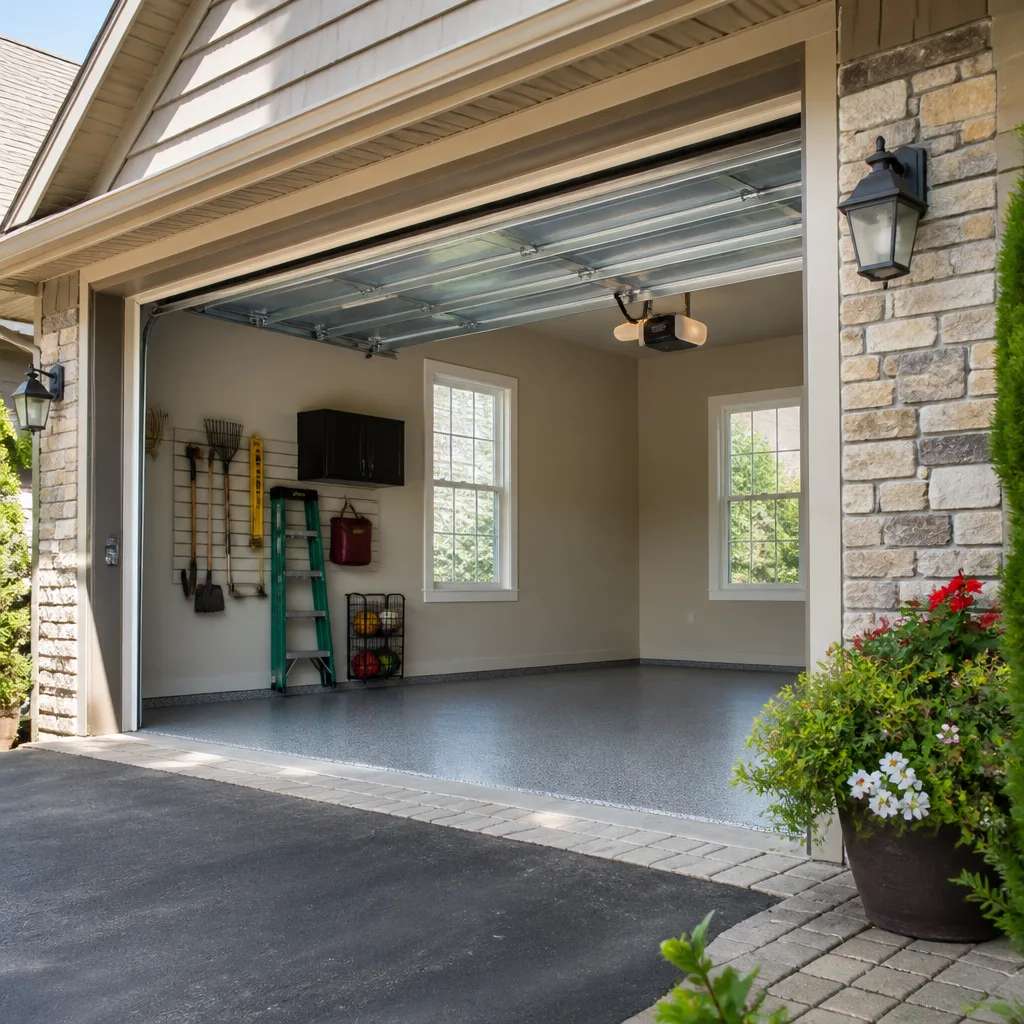 LiftMaster openers
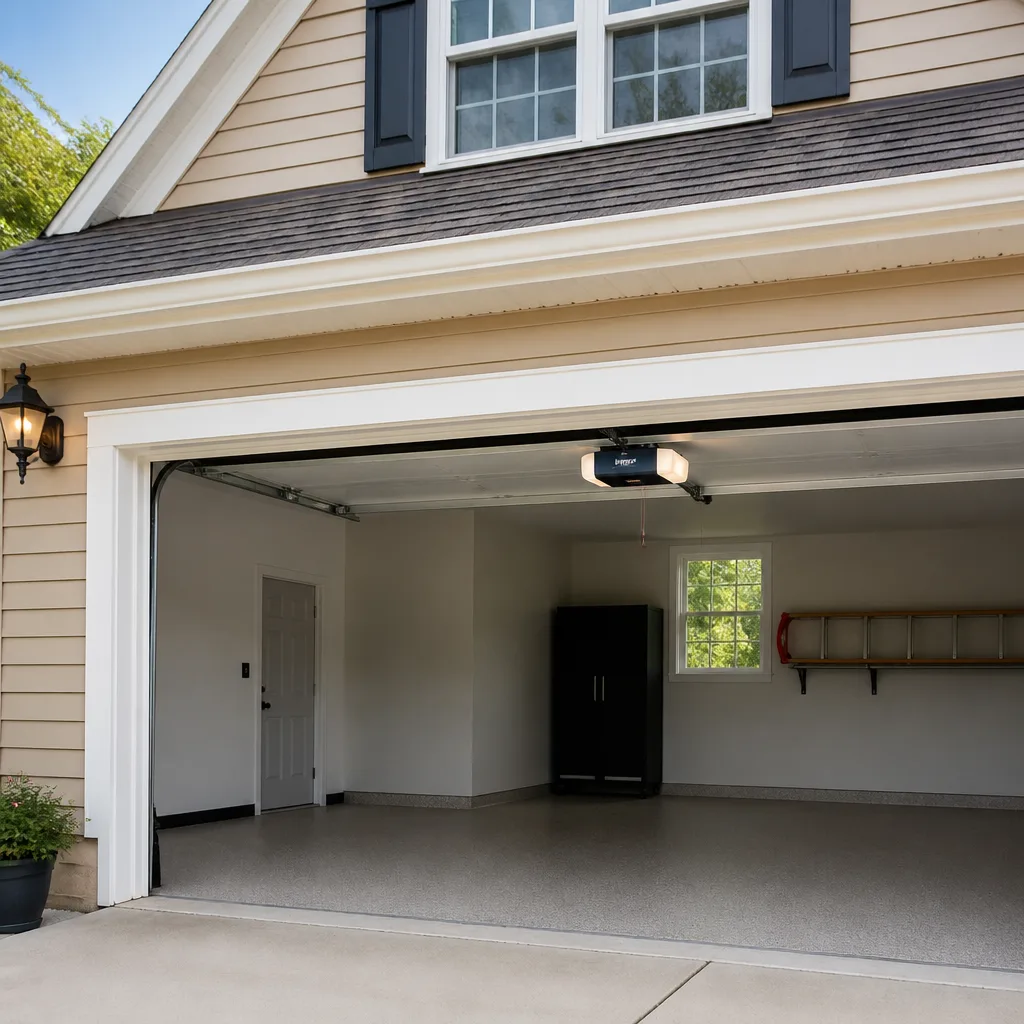 Chamberlain openers
Full 25-point door and opener safety check with every visit - springs, cables, rollers, tracks, and your LiftMaster or Chamberlain opener included
You get a price before we start. It does not change when the pro arrives.
Get your free estimateGarage Door Warning Signs: A Vernon Homeowner’s Reference Guide
Most garage doors that fail suddenly don’t fail suddenly. They give notice for 60 to 90 days, quietly, in ways that look like normal aging until the morning the door jams halfway and refuses to budge on your way to work. A door that takes two seconds longer to open than it did six months ago isn’t simply getting old; that lag usually traces back to spring tension that’s drifted out of balance, and every extra cycle at that imbalance puts strain on the opener motor. This guide is about catching those signals early: the sounds that separate spring wear from roller wear, a simple balance test you can run in your garage, and the warning signs that show up here in Vernon specifically.
Quick Answer
Garage door warning signs worth acting on include uneven door travel, a door that reverses or hesitates partway down, springy or grinding noises at the start of a cycle, visible cable fraying, and a door that won’t stay balanced when opened halfway. Any one of these usually points to a component in early failure, and most of them worsen over weeks rather than days. Catching them within that window is what keeps a small spring or roller fix from becoming a full opener replacement.
Styles & brands we work with
- Raised-panel steel
- Carriage house
- Modern flush
- Full-view glass
- LiftMaster openers
- Chamberlain openers
Table of Contents
- The Sounds That Tell Three Different Problems Apart
- The 60-Second Balance Test (No Tools Required)
- Spring Warning Signs: The Ones That Matter Most
- How to Read Cable Fraying Without Panicking
- Opener Behavior Changes and What They Mean
- Vernon-Specific Warning Signs: Frost, Salt, and Seasons
- Which Signs Mean “Call Now” vs. “Call This Week”
- Common Mistakes to Avoid
The Sounds That Tell Three Different Problems Apart
The first sign of trouble is almost always audible, but not every noise means the same thing. A door that’s developing an issue tends to send out three distinct sound profiles, and knowing which is which saves you from replacing a part that was never the problem. We’ve listened to hundreds of doors across Vernon and the pattern holds: the location and rhythm of the sound identifies the failing component before anyone opens a toolbox.
Here’s how to sort them:
- A sharp metal pop at the start of a cycle, once per open or close. Usually a torsion spring that’s lost tension or an extension spring stretching toward its limit. This is the sound most worth taking seriously, because a tired spring is closer to breaking than most homeowners realize.
- A rhythmic rattle or scraping that repeats as the door travels. Nylon or steel rollers that have worn flat, or a track that’s come slightly out of alignment. This is usually a maintenance fix rather than an emergency.
- A low hum or groan from the opener housing itself, with the door barely moving. Motor strain, often caused by a door that’s become too heavy for the opener to lift cleanly because the springs are no longer shouldering the load. Left alone, this is the path to an opener replacement.
The distinction matters for one reason: a strained motor from a heavy door gets replaced, and the new opener dies the same way within months if the underlying spring problem was never fixed. If the sound comes from the door and the tracks, the fix is mechanical. If it comes from the box on the ceiling, look to the springs first.
The 60-Second Balance Test (No Tools Required)
You can check whether your door is properly balanced in about a minute, without tools, and it’s the single most useful habit for catching spring problems early. A balanced door weighs almost nothing in your hands when the opener is disconnected, because the springs are doing the lifting. An unbalanced door feels heavy because the springs have stopped carrying their share.
Here’s the sequence:
- Close the door fully and pull the manual release cord (usually red) to disconnect the opener. The door is now hand-operable.
- Lift the door to roughly waist height, about halfway open, and let go.
- Watch what happens. A healthy door stays put within a few inches. A door that drops on its own is carrying too little spring tension; a door that lurches upward is over-tensioned.
- Reconnect the opener afterward by running it to the door and letting the carriage re-engage, or by hand until it clicks.
If the door falls or rises more than a few inches on its own, don’t keep cycling it while you decide what to do. That imbalance is loading the opener motor on every trip, and it’s also a sign the springs are working outside their design range. We treat this test result as the clearest early indicator there is, and we recommend running it a few times a year, especially after a cold snap in Vernon when spring steel has contracted.
Spring Warning Signs: The Ones That Matter Most
Springs are a safety issue, not just a repair ticket, and the warning signs they give deserve more attention than any other component on the door. A torsion spring under load holds enough stored energy to cause serious injury if it releases unexpectedly, which is why spring work is handled as a precise, careful procedure rather than a quick swap. Homeowners should never attempt to adjust, wind, or replace a spring themselves. The tension that makes it effective is the same tension that makes it dangerous. What you can do is recognize when a spring is telling you it’s near the end of its usable life.
Watch for these on the spring itself and in how the door behaves:
- A visible gap in a torsion spring. A torsion spring that has broken usually shows a clean split, often about a quarter of the way along its length. If you can see daylight through the coil, the spring has failed and the door is being held by the opener alone.
- An extension spring stretched past its original length. Extension springs (the ones running along the tracks) that hang noticeably longer than their counterpart or look permanently extended are worn out even if they haven’t snapped.
- A door that won’t stay closed or won’t stay open. A door that drifts down after opening, or slams shut rather than settling, points to lost spring tension.
- A door that feels unusually heavy by hand. This is the manual version of the balance test above, and it’s the most reliable sign that the springs have given up part of their job.
If any of these are present, stop operating the door. For spring issues specifically, our garage door spring repair service is set up around the safety-first handling this work requires, including torsion and extension systems. When one spring in a matched pair fails, both are usually replaced together, since the surviving spring has absorbed the same wear and is close behind.
How to Read Cable Fraying Without Panicking
Cable condition is one of the hardest things for a homeowner to judge, because surface rust and actual strand failure look similar at a glance. The distinction is worth learning: a cable with light surface rust is cosmetic and normal for its age, while a cable with broken strands is a genuine structural warning that means the cable could let go under load. A garage door cable under tension can whip or snap with real force, so this is a component to inspect from a distance and leave to a trained technician to replace.
Here’s how to tell them apart when you look:
- Surface rust: an orange-brown discoloration across the cable, but the strands are still uniform and tightly wound. Cosmetic, common, and manageable with periodic lubrication of the cable and pulleys.
- Fraying: individual strands poking out like a brush or a frayed rope end. Even one or two broken strands near a drum or pulley point to metal fatigue, and the cable should be replaced before it fails.
- A slack or off-track cable: a cable that’s come loose from its drum or is hanging instead of under tension means the door should not be operated at all until it’s repaired.
The rule we give homeowners: any broken strand, any slack cable, or any cable that’s come off a drum is a call-now situation. Surface rust alone is a keep-an-eye-on-it situation. If you’re not sure which you’re looking at, don’t climb up for a closer view; a photo from the floor is safer and just as useful when a technician assesses it.
Opener Behavior Changes and What They Mean
Opener quirks are often the first thing a homeowner notices, and they’re useful because each specific behavior tends to map to a specific cause. Not every opener issue is an opener problem, though, and misreading it costs money. A door that reverses on the way down, hesitates before moving, or stops partway is often reporting a mechanical problem elsewhere, and the opener is the messenger.
The most common behavior changes and their likely causes:
- Hesitation before the door moves. Often the opener working harder than it should against a stiff or unbalanced door, or a worn gear inside the motor unit.
- Reversal partway down, then re-opening. The safety sensors are being interrupted, most often by a misaligned sensor, debris in the path, or a track the door is running against. The opener is doing what it’s designed to do.
- Partial travel, stopping at the same point each time. Usually a travel limit setting that’s drifted, or a mechanical obstruction the door keeps meeting. If the door itself binds at that height, the cause is in the tracks or rollers, not the opener.
- The light flashes but the motor doesn’t engage. A failing drive gear or a capacitor nearing the end of its life.
- Remote or keypad working intermittently. Battery, signal interference, or a logic board on its way out, depending on whether it’s consistent or random.
Because opener behavior can be misleading, accurate diagnosis matters more than speed here. Our garage door opener repair team diagnoses the specific opener model before ordering any parts, whether it’s a LiftMaster, Chamberlain, Genie, or Craftsman system. That means the right part for your specific model, not a generic guess.
Vernon-Specific Warning Signs: Frost, Salt, and Seasons
A garage door in Vernon faces conditions that show up on the door in particular ways, and a few of the warning signs homeowners here see most often are tied directly to the local climate and the way driveways get treated through winter. Knowing what’s seasonal and normal versus what’s genuinely failing is the difference between a routine fix and an overlooked problem.
Three local patterns to watch for:
- Frost heave damage to the bottom panel. As the ground freezes and thaws through a Connecticut winter, the pavement at the door’s threshold can lift and drop. A door that’s been catching on a heaved apron often shows scraping, dents, or a bottom seal that no longer meets the floor. Left alone, the door keeps forcing against the obstruction and stresses the opener. Check the bottom seal line after hard freezes and again at the thaw.
- Salt-accelerated track and hardware corrosion near the driveway. Road salt tracked onto the driveway and splashed toward the door accelerates rust on the tracks, hinges, and rollers closer to the floor. What looks like cosmetic discoloration on a lower track can turn into a rough-running door that binds and jerks. A visual check for rust bloom on the bottom section of track is worth doing each spring.
- Seasonal stiffness at the start of a cycle. Cold weather thickens grease and contracts metal, so a door that’s slightly out of adjustment in October can start grinding by January. If the stiffness doesn’t clear as the door warms into the cycle, it’s not the cold alone; something needs adjusting.
These are the signs we hear about most from Vernon homeowners, and they rarely announce themselves. They develop quietly over the course of a season. If your door suddenly scrapes or stalls at the same point every time, look at the threshold and the lower track before anything else.
Which Signs Mean “Call Now” vs. “Call This Week”
Triage is the practical skill this guide is meant to give you. Some warning signs are urgent because they signal a component close to failing under load, while others are maintenance that can wait for a scheduled visit. Sorting them helps you decide how fast to move and keeps you from operating a door that’s genuinely unsafe.
Treat these as call-now situations, and stop operating the door:
- A broken torsion spring (visible gap in the coil) or an obviously failed extension spring.
- Any broken cable strand, slack cable, or cable off the drum.
- A door that’s come off its track or hangs crookedly.
- A door that drops on its own during the balance test, or won’t stay open.
Treat these as call-this-week situations, where you can keep using the door cautiously:
- Rhythmic rattling or scraping from worn rollers or a slightly misaligned track.
- An opener that hesitates or reverses occasionally but still completes cycles.
- Surface rust on cables or lower track that isn’t yet frayed.
- A bottom seal that’s torn or not seating fully against the floor.
We answer the phone when a warning sign turns into a breakdown. Call (877) 492-3186. We answer 24/7. Fast dispatch from 7am to 7pm, Sunday through Friday.
Common Mistakes to Avoid
The mistakes homeowners make with garage door warning signs tend to cost more than the signs themselves. Here are the ones we see most often, and the reasoning behind each.
- Replacing the opener when the springs are the problem. A door that’s become heavy from tired springs will wear out any new opener you install. Fix the springs first, or the new motor dies the same way. We see this misdiagnosis repeatedly in Vernon, especially on older doors with worn torsion systems.
- Trying to adjust or wind a torsion spring yourself. This is the single most dangerous thing a homeowner can attempt on a garage door. The stored energy in a wound spring is enormous, and a bar that slips can cause serious injury. Leave spring work to a trained professional.
- Ignoring a door that won’t stay balanced during the hand test. A door that drifts when you let go at waist height is telling you the springs are no longer carrying the load. Skipping this test means missing the earliest, cheapest fix.
- Mistaking a safety-sensor reversal for an opener failure. A door that reverses on the way down is usually doing exactly what it should be; the obstruction or misaligned sensor is the culprit. Ordering an opener you didn’t need is an avoidable cost.
- Treating lower-track rust as cosmetic after a Vernon winter. Salt tracked toward the door accelerates corrosion on the lower track and rollers. Left unaddressed, a rough-running lower track binds the door and stresses every component above it.
- Oiling the tracks. Tracks should stay clean and dry; oil attracts grit and makes rollers slide instead of roll. Lubricate rollers, hinges, and springs where specified, but keep grease off the track surface.
- Putting off a bottom-seal replacement through a cold winter. A seal that no longer meets the floor lets cold air and moisture under the door, and the gap is often a sign the door is slightly out of adjustment. Deal with it before the ground freezes hard.
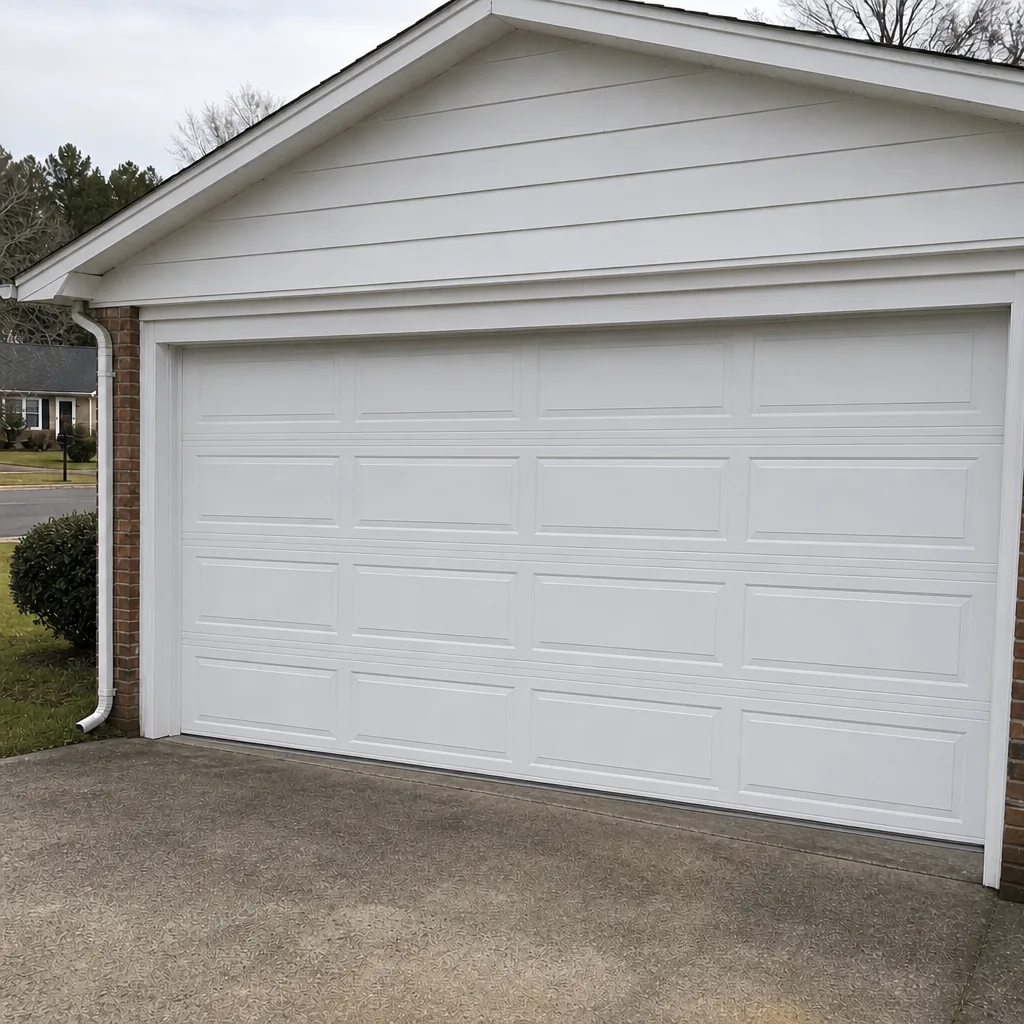
See the difference
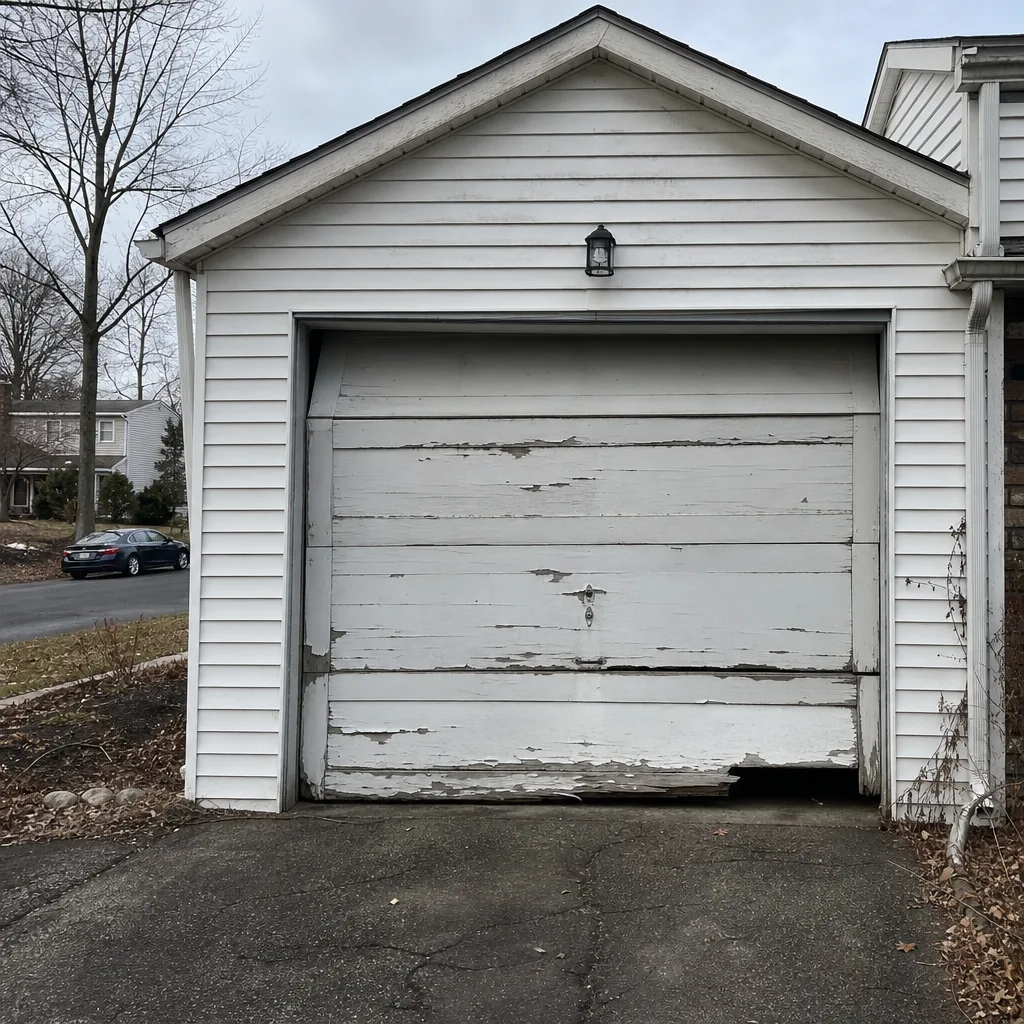 Before
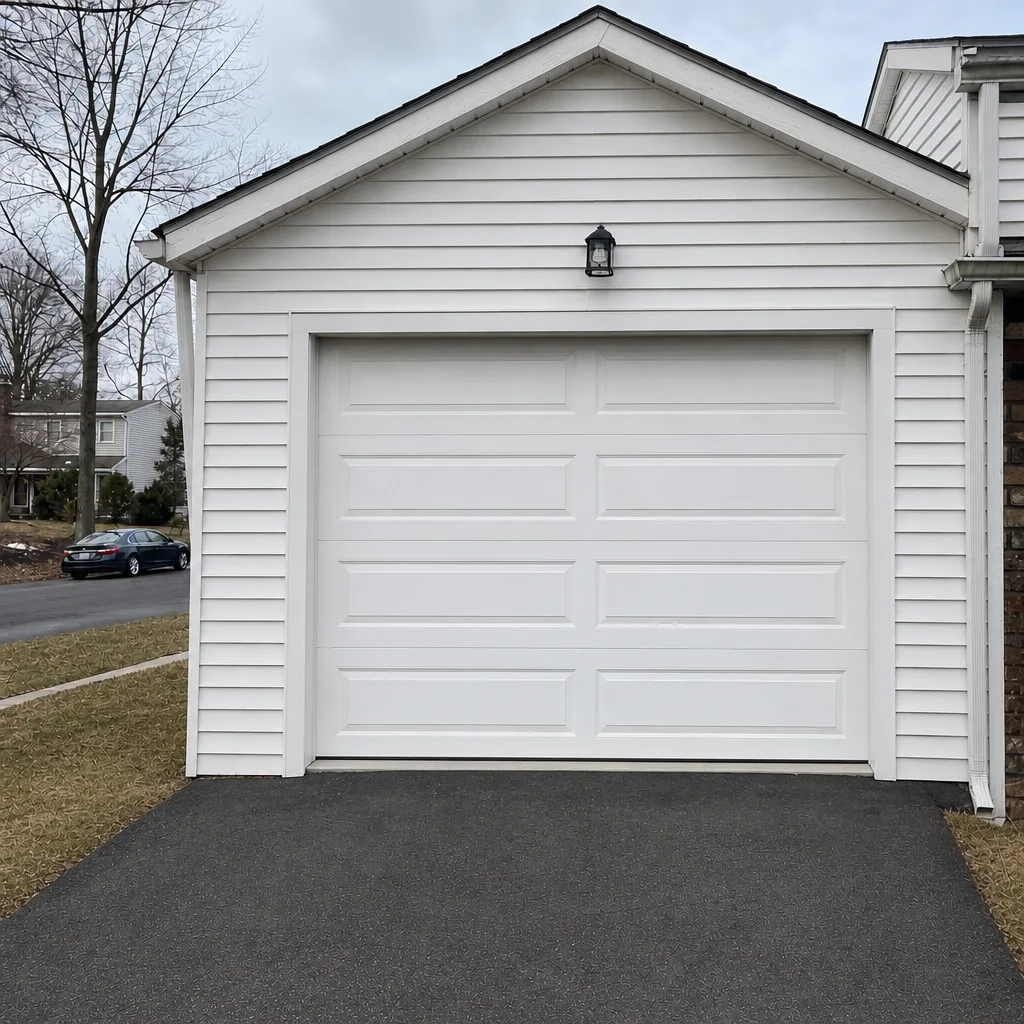 After
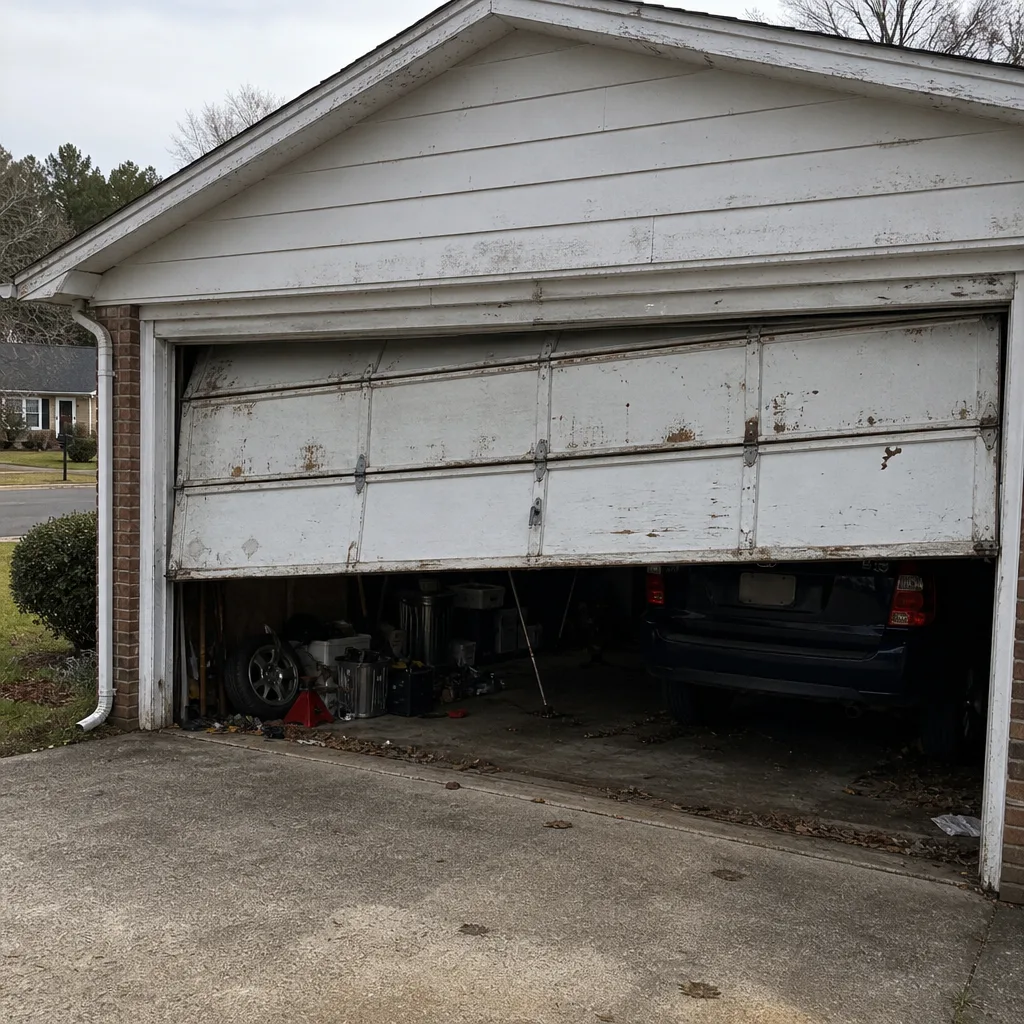 Before
 After
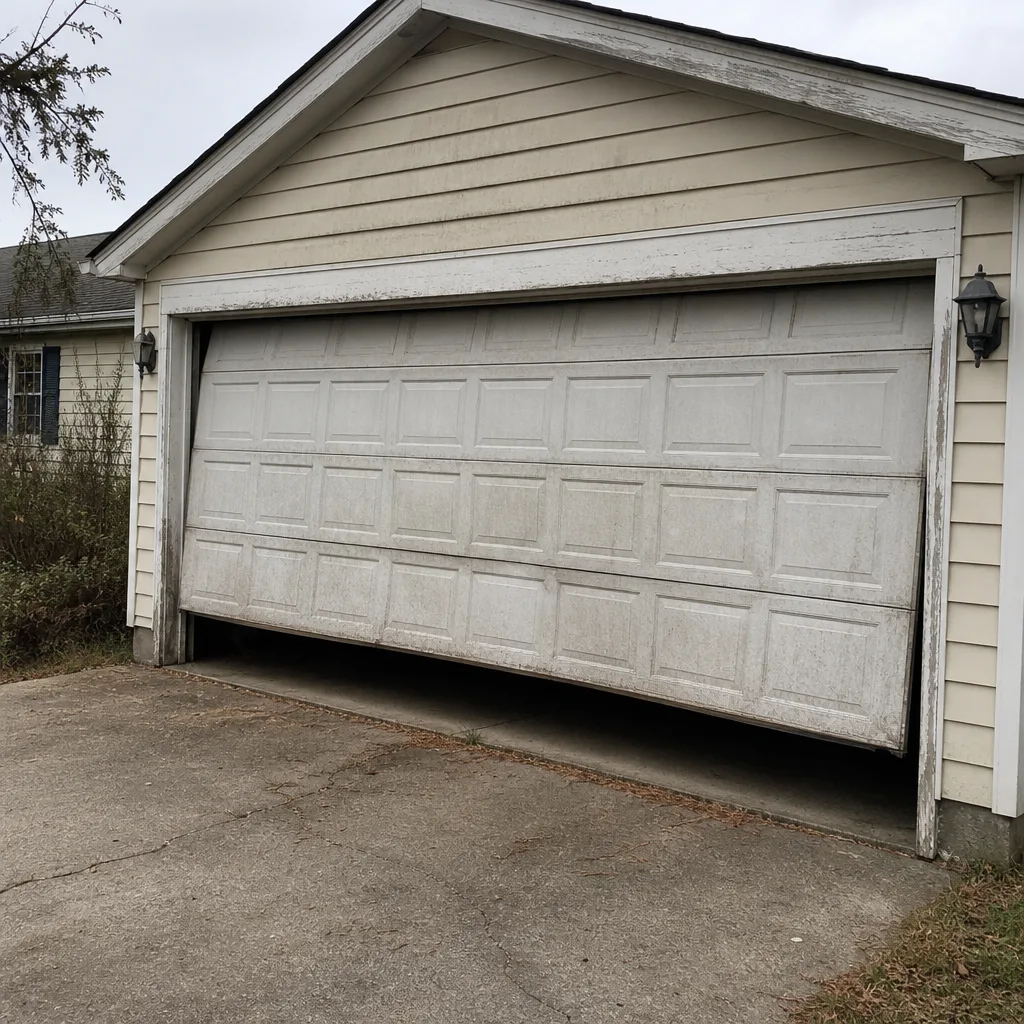 Before
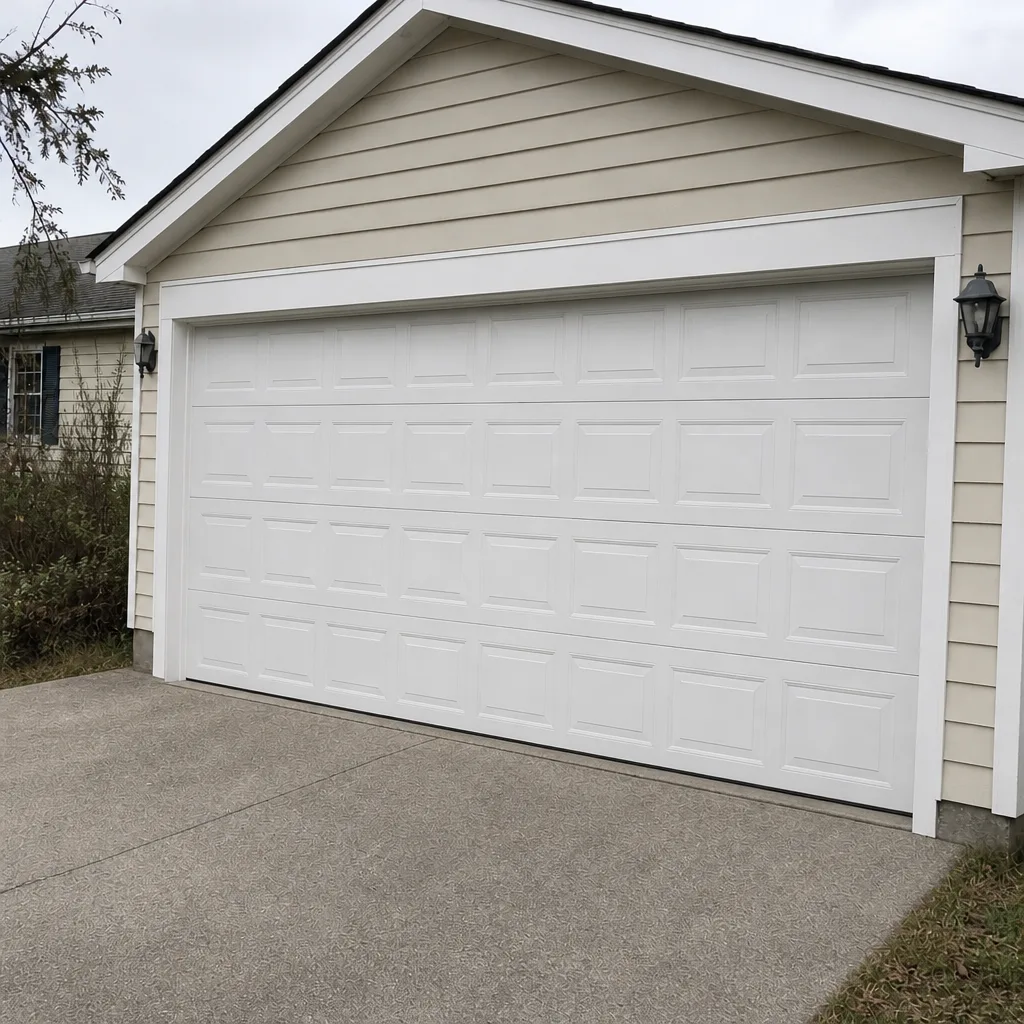 After
When to Call a Professional
Call a professional the moment a warning sign involves a spring, cable, or track, because those are the components that can fail under load and cause injury. Call sooner rather than later if the door drops on its own during a hand test, hangs crookedly, resists opening, or a cable shows broken strands. For warning signs on the opener side, hesitating motors or doors that reverse partway, accurate diagnosis before parts are ordered saves you from a misdiagnosis and an unnecessary replacement. Garage Door Repair Vernon offers free estimates in Vernon for any of these situations, and we handle everything from an ailing roller to a full new-door install, so you don’t have to find a second contractor partway through. Call (877) 492-3186. We answer 24/7. Fast dispatch from 7am to 7pm, Sunday through Friday.
Frequently Asked Questions
The first signs are usually uneven door travel, new noises at the start of a cycle, or a door that hesitates or reverses partway down. Around Vernon, cold-weather stiffness, a bottom seal that stops meeting the floor, and scraping near the threshold after frost heave are also common early signals. Any one of these is worth a closer look before the door stops working.
Look for a visible gap in a torsion spring, an extension spring stretched noticeably longer than its counterpart, or a door that feels heavy by hand and won’t stay at waist height during the balance test. Surface rust on the spring is normal; a visible split in the coil is not. Don’t try to test a spring yourself beyond the hand-lift test, and call a professional if any of these are present.
Usually not, and often it’s the safety system working as designed. A door that reverses partway down is typically responding to an obstruction in the door’s path or a misaligned sensor, not failing. The right response is to clear the path and check the sensors, then call for a diagnostic if the reversal continues.
Even one or two broken strands near a drum or pulley are enough to warrant replacement, because the cable is weakened where it matters most. Surface rust across an otherwise uniform cable is cosmetic and can be managed with lubrication. The rule is simple: broken strands mean a call, surface rust alone means keep an eye on it.
The opener is usually straining against a door that’s become too heavy because the springs have lost tension, or a worn drive gear inside the motor is failing to engage. Diagnosing which before ordering parts is what keeps a small spring fix from turning into an unnecessary opener replacement. A technician can usually identify the culprit in minutes.
An inspection or at least a visual check after winter is a good habit, because frost heave, salt-tracked corrosion, and cold-season stiffness are the most common seasonal issues the door faces here. Check the bottom seal line, the lower track, and the balance test. If anything scrapes, stalls, or fails the hand test, book a service call.
The Bottom Line
Garage door failures nearly always give 60 to 90 days of notice, in the sounds the door makes, the way it hesitates or drifts, and the balance test you can run in under a minute. Springs, cables, and tracks carry the load and deserve professional attention; opener quirks are the messenger, not always the problem. Around Vernon, frost heave and winter salt add their own warning signs worth checking each season. If you’ve read this guide and anything matches, call now rather than wait. For garage door repair in Vernon, free estimates make the first step easy: call (877) 492-3186, and we’ll tell you what’s actually wrong.
Call (877) 492-3186 for a free estimate. We answer 24/7. Fast dispatch from 7am to 7pm, Sunday through Friday. Whether you’re a homeowner or a property manager in Vernon, Garage Door Repair Vernon is the one call for repairs, springs, opener work, and new installations from Clopay, Amarr, Wayne Dalton, and Raynor.
Written by the team at Garage Door Repair Vernon.