
Last updated November 22, 2026
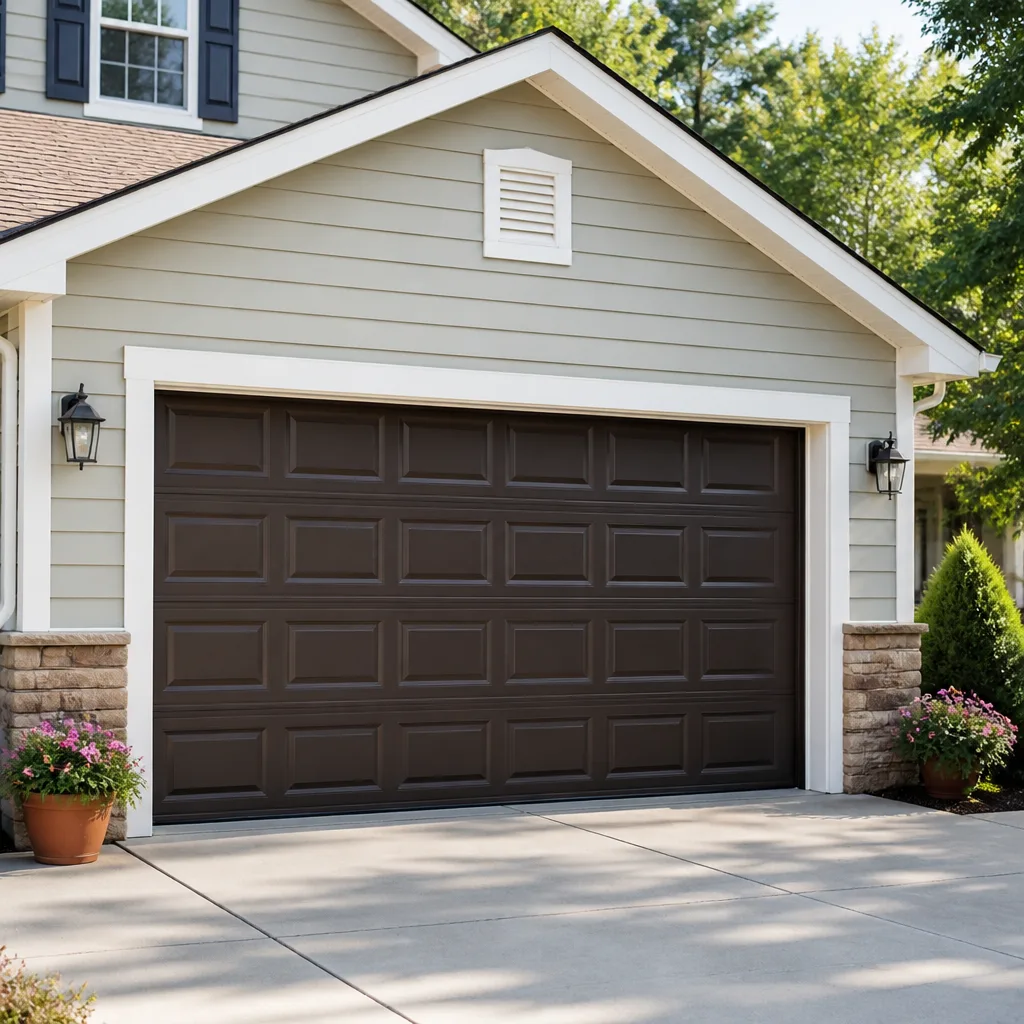 Raised-panel steel
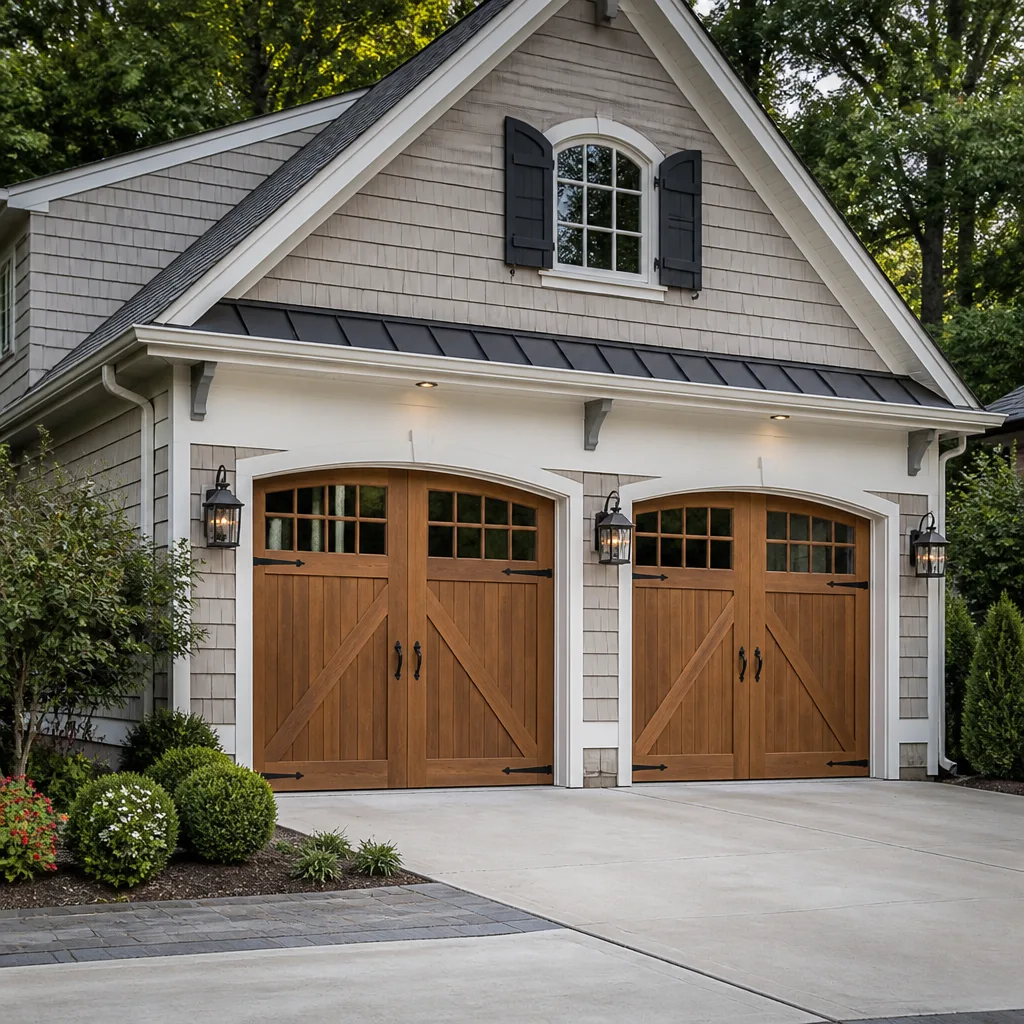 Carriage house
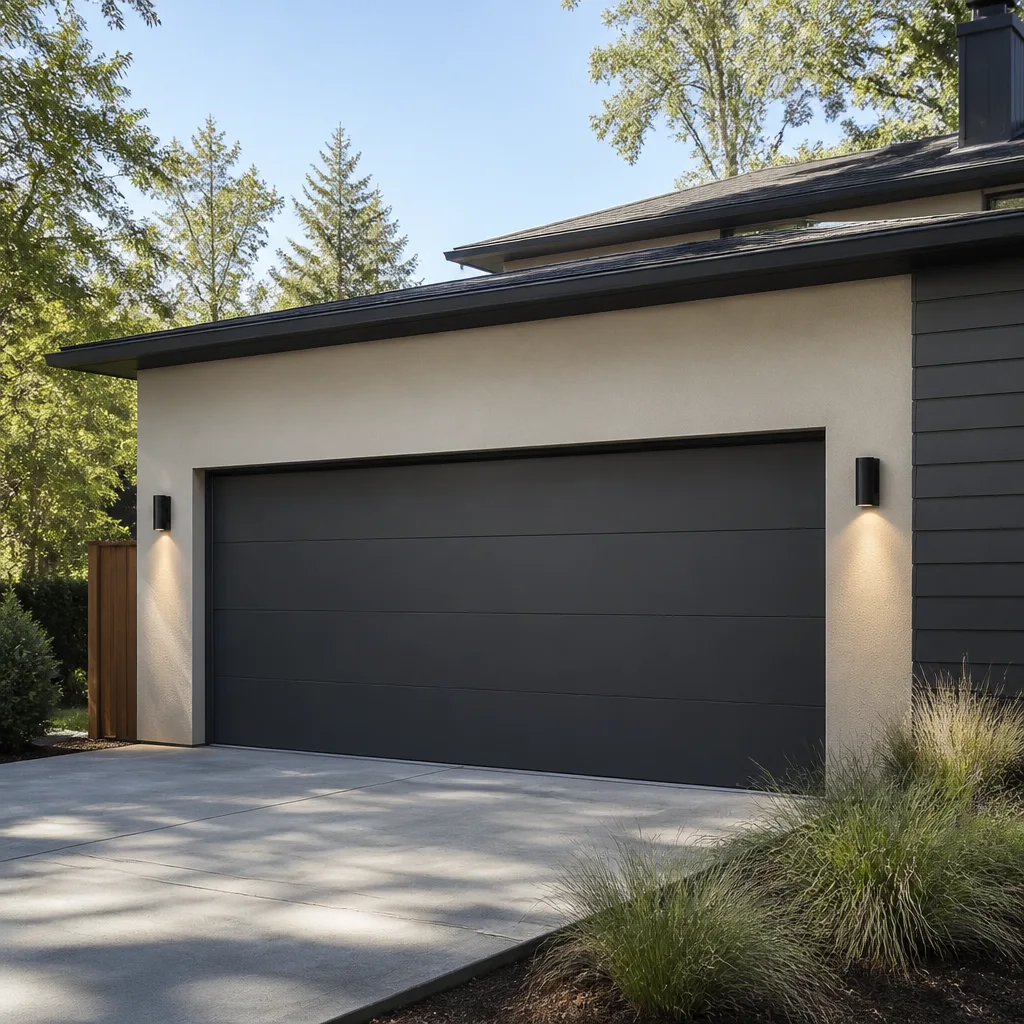 Modern flush
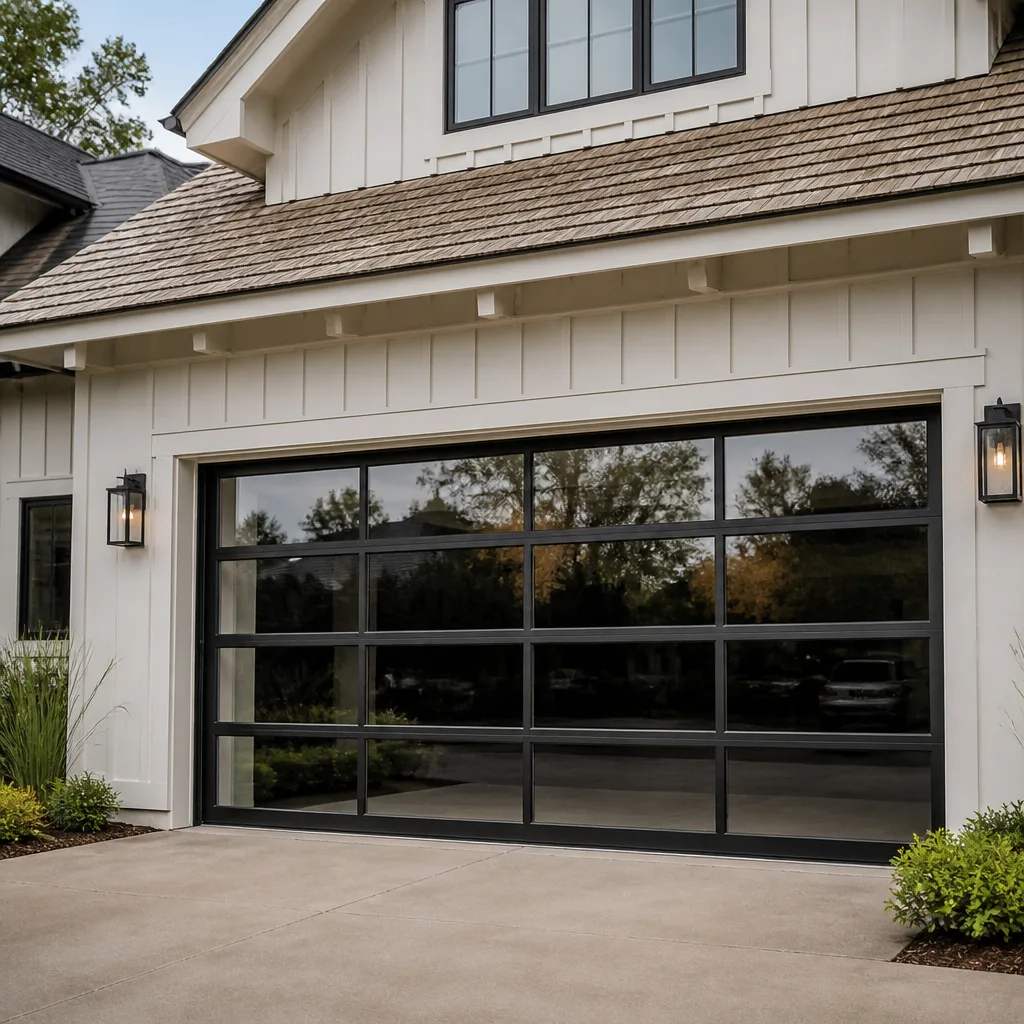 Full-view glass
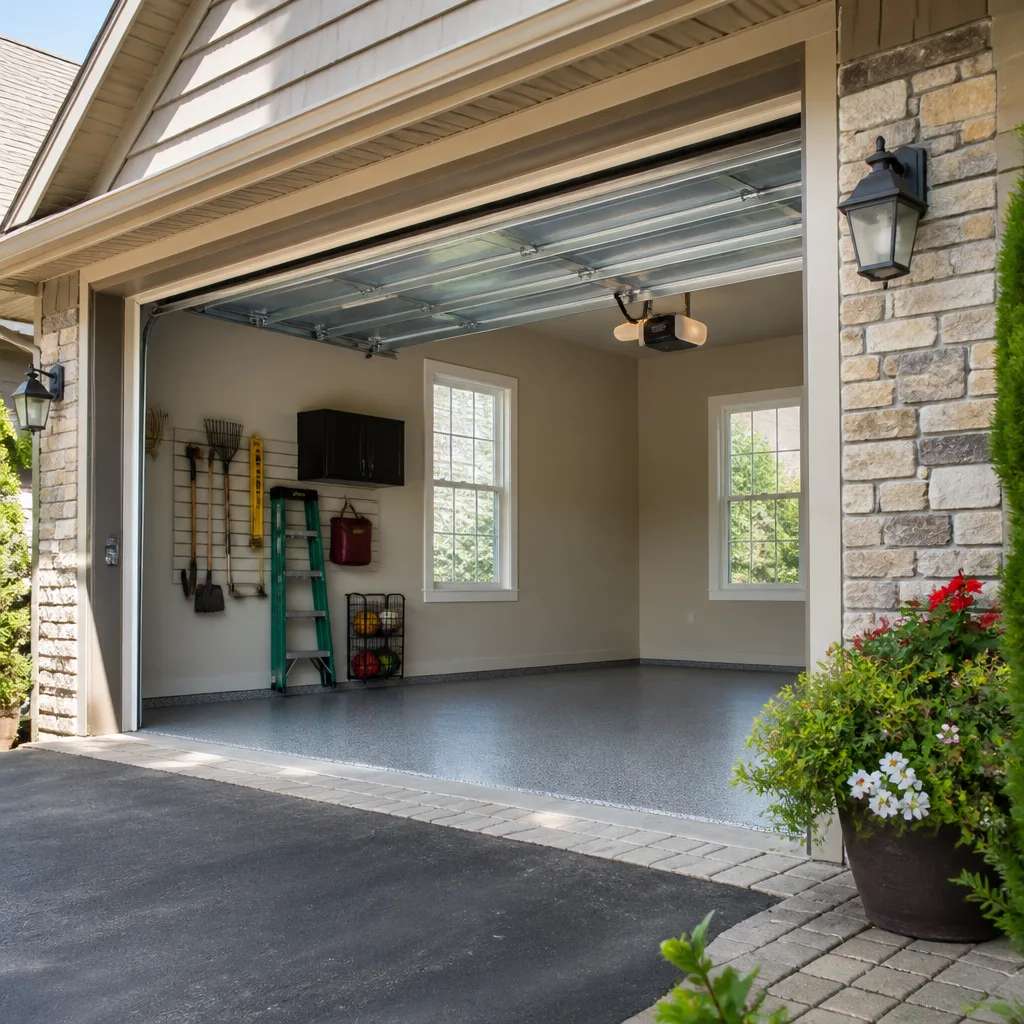 LiftMaster openers
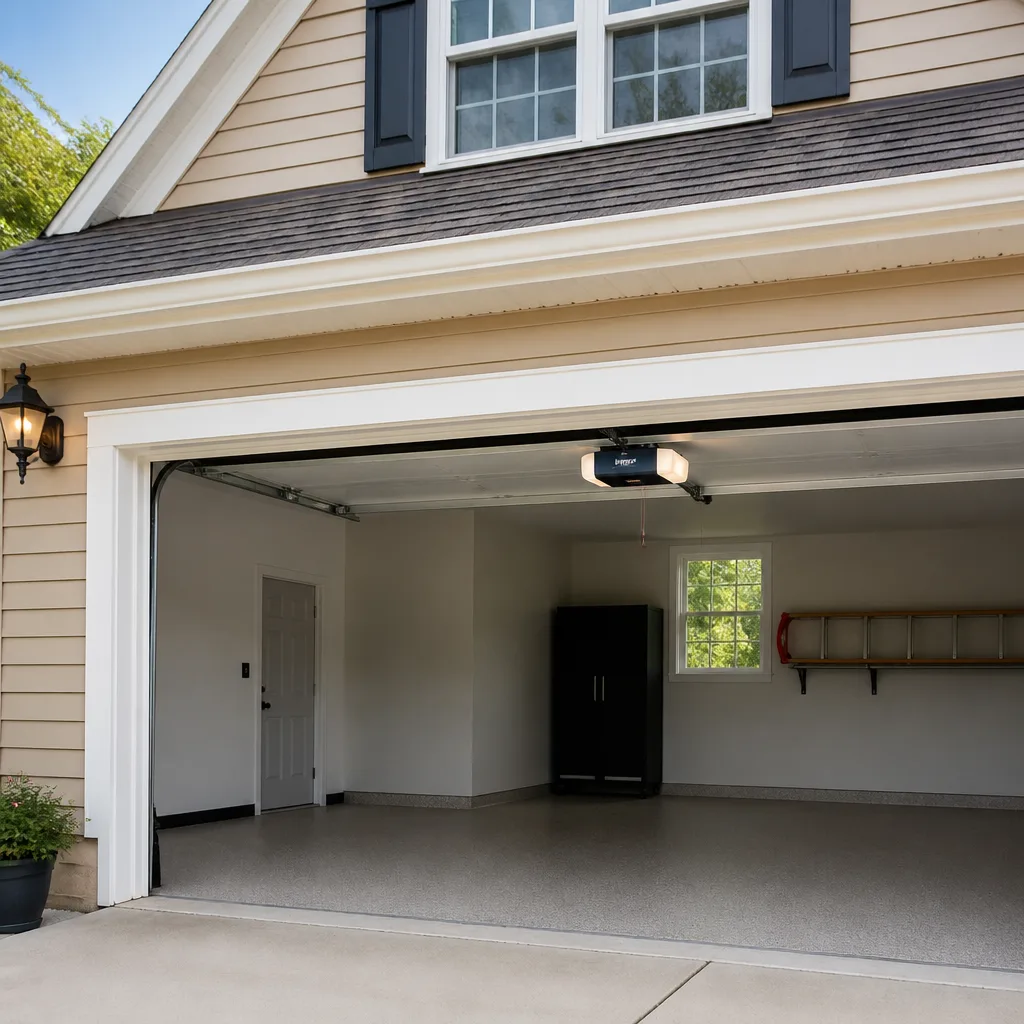 Chamberlain openers
Full 25-point door and opener safety check with every visit - springs, cables, rollers, tracks, and your LiftMaster or Chamberlain opener included
You get a price before we start. It does not change when the pro arrives.
Get your free estimateThe Complete Guide to Garage Doors in Vernon
Most Vernon homeowners don’t realize their garage door is the largest moving mechanical system in the house, and the one most likely to fail during a January cold snap when they can least afford downtime. It’s also the single heaviest object that moves on its own, every day, in temperatures that swing from single digits to the high nineties over a Connecticut year. The parts that make that happen wear on a schedule most people never think about until something snaps. This guide maps the decisions that actually matter for a garage door in Vernon: how our freeze-thaw cycle grinds down springs, which materials survive Connecticut humidity and road salt, what a new door really costs once installation is included, and when a repair is a genuine fix versus a delay that costs more within a year and a half.
Quick Answer
A garage door in Vernon needs service roughly every two to three years for springs and balance, an annual safety check, and a full replacement when the panels, tracks or hardware are structurally compromised rather than just worn. Vernon’s freeze-thaw cycle speeds up spring fatigue compared to milder climates, so torsion springs here often fail sooner than a manufacturer’s generic lifespan suggests. The right call depends on the door’s age and condition, not on a calendar alone, and a written estimate is the only number that should drive the decision.
Styles & brands we work with
- Raised-panel steel
- Carriage house
- Modern flush
- Full-view glass
- LiftMaster openers
- Chamberlain openers
Table of Contents
- How a Garage Door Actually Works
- Why Vernon’s Freeze-Thaw Cycle Wears Springs Faster
- Which Door Materials Hold Up in Connecticut
- Repair or Replace? How to Decide
- What Garage Door Work Costs in Vernon
- Choosing and Diagnosing an Opener
- Brand Availability and Service Gaps in Vernon
- A Simple Maintenance Routine
How a Garage Door Actually Works
A sectional garage door is a balanced system, not a simple lift. Springs carry most of the door’s weight so the opener only has to nudge it, and that balance is the whole game. When it drifts, everything else pays for it: the opener strains, the cables take more load, the rollers bind, and the panels start to twist.
Most doors in Vernon are one of two spring types. Torsion springs mount on a shaft above the door and do the work by twisting. Extension springs run along the horizontal tracks on either side. Torsion is the more common setup on newer doors and the more controlled of the two. Extension springs stretch instead of twist and, when they fail, have more stored energy to release.
This is the part worth slowing down for. Torsion and extension springs are under extreme tension at all times, even when the door is closed. Adjusting, removing or replacing them is not a homeowner job, and the injury risk is real and serious. Springs are a safety issue, not just a repair ticket. A trained technician uses the right winding bars, the right technique and the right replacement rating for the door’s weight. If you suspect a spring is broken, stop using the door and have it looked at professionally rather than trying to work around it.
The rest of the system is more forgiving. Rollers, hinges, cables and the opener carriage are serviceable. The balance is what determines whether those parts last. Our garage door spring repair work starts with a balance check for exactly this reason.
Why Vernon’s Freeze-Thaw Cycle Wears Springs Faster
Here’s the counterintuitive part: it isn’t the cold alone that wears a spring out. It’s the cycling. A Vernon winter takes the temperature from a hard freeze overnight to above freezing by midday, sometimes for weeks at a stretch, and each of those swings flexes the steel in a torsion spring by a tiny amount. Do that a few hundred times a season and the metal fatigues faster than a manufacturer’s general lifespan estimate accounts for, because those estimates are written for a national average, not for a town that gets real Connecticut freeze-thaw.
The same cycle affects more than springs:
- Lubricant film breaks down faster when it’s cold, so rollers and hinges dry out and start to grind.
- Metal contracts and expands, which can loosen track bolts and shift panel alignment over a season.
- Weather seals stiffen, then crack, letting in cold air and moisture at the bottom of the door.
- Wood doors absorb and release moisture, which warps panels and stresses the hardware that holds them.
In our experience, the practical takeaway is timing. A spring that’s already creaking or visibly gapped going into a Vernon winter is a spring that’s more likely to fail during one. A pre-season check in late fall is cheaper than an emergency call in a cold snap.
If your door won’t open or close and you’re not sure why, start with garage door repair rather than guessing at the cause. A door that’s stuck is usually a spring, a cable or an opener fault, and the fix depends on which one it is.
Which Door Materials Hold Up in Connecticut
Vernon’s conditions are a specific mix: humid summers, freezing winters, and road salt tracked in from the Route 44 and I-84 corridors that runs off vehicles and collects at the door threshold. That salt exposure matters more than most buying guides admit. It attacks the bottom section and the hardware, not the whole door evenly, so the material you choose is really a question of how it handles the bottom eighteen inches.
Here’s how the common materials hold up:
- Steel: The most common choice in Vernon and the most practical. A good steel door resists humidity well and handles salt spray at the base far better than wood. The trade-off is dents from impacts, and the bottom edge needs regular attention to keep rust from starting.
- Aluminum: Lighter and rust-resistant, good for humid stretches, but it dents more easily than steel. A solid pick for a door that’s more about looks than heavy daily use.
- Wood: Beautiful and the most vulnerable to Connecticut’s wet-dry cycle. Wood needs consistent sealing and repainting to survive here, and the bottom rail takes the worst of the moisture and salt.
- Composite and vinyl: Low maintenance and rot-resistant, which suits the humidity. They’re less common on larger doors and can be sensitive to extreme temperature swings.
Insulation is the other decision homeowners in Vernon ask about most. An insulated door helps with the room above the garage, which in Connecticut gets cold fast. Our installation work covers Clopay, Amarr, Wayne Dalton and Raynor lines, so we can match the material and insulation to how the door is actually used rather than sell whatever’s on a truck.
Repair or Replace? How to Decide
Most garage door questions come down to one thing: is this a repair or a replacement? The honest answer is that a single worn part is a repair and a compromised structure is a replacement, and the line between them is where a lot of money gets wasted in both directions.
Work through this in order:
- Is the door structurally sound? Deep dents, cracked panels, bent tracks or a sagging frame point to replacement. A door that’s out of square will keep eating parts no matter how many you replace.
- How many parts are failing at once? One spring or one roller is a repair. Springs, cables, rollers and hinges all going within a season or two means you’re paying toward a replacement one part at a time.
- Is the opener the bottleneck? An older opener that can’t lift a heavier modern door can often be replaced on its own. That’s a repair decision, and a reasonable one.
- What’s the actual age and condition? A door near the end of its practical life is a candidate for replacement. A door in good shape with one failed spring is a repair, full stop.
The trap most homeowners fall into is a “repair” that’s really a delay. If a door is showing three or four problems at once, patching the most urgent one and waiting tends to mean a second and third call within eighteen months, and the total climbs past what a replacement would have cost. Our job is to tell you honestly which side of that line you’re on, then give you a written price either way.
If you’re replacing the door, our garage door repair team also handles installation, so you don’t have to find a second contractor when the door itself needs to go.
What Garage Door Work Costs in Vernon
Cost is the question everyone asks first, so here’s how the ranges usually break down for common jobs. These are typical estimates for this market, given as ranges. The written estimate you get after we look at the door sets the final price, and it’s quoted and agreed before any work starts. That’s the whole point of a written estimate: no surprises on the invoice.
- Spring replacement (one spring): typically $180 to $340
- Matched pair of springs: about twice the single-spring range, since the pair is usually replaced together
- Opener repair: typically $120 to $260, depending on the fault
- Opener replacement: typically $300 to $650, depending on the model
- Roller, hinge or cable repair: typically $90 to $250
- New door installation: the price depends on material, size and insulation, which is why a free measure and a written quote come first
The big-box math gets confusing because a door sold flat at a warehouse looks cheaper than an installed price. It isn’t, once you add delivery, a separate installer and Connecticut labor rates. What you actually pay is the installed number, so compare that against a written estimate that includes the door and the labor together. Raynor and Clopay lines, for example, come in different tiers, and the tier drives the number more than the flat price does.
If you want an exact figure for your door, call (877) 492-3186. Estimates are free, and we’ll give you the number in writing before anything starts. For a broken spring specifically, garage door spring repair is priced per spring, so knowing whether it’s one or a pair matters.
Choosing and Diagnosing an Opener
An opener is not a generic box on the ceiling. It’s matched to the door’s weight and to the way you use it, and the wrong diagnosis is the most common reason a repair gets wasted. The right part for your specific opener model comes from knowing whether the fault is the motor, the logic board, the belt or chain, the safety sensors or the wall control.
The main platforms we work with are LiftMaster, Chamberlain, Genie and Craftsman. Those cover most of what’s actually installed in Vernon driveways, which means we can diagnose the real fault before ordering a part rather than guessing. A few symptoms worth knowing:
- Door reverses partway down: usually a safety sensor or travel-limit issue, not a motor failure.
- Motor runs but the door doesn’t move: often a broken spring, a disconnected carriage or a stripped gear.
- Loud grinding: frequently worn gears or a failing belt.
- Remote works intermittently: often a battery or a logic board issue.
When the opener itself has given up, our garage door opener repair covers LiftMaster and Chamberlain smart systems as well as older Genie and Craftsman units. The rule is simple: diagnose first, then order the right part. Cable, spring and opener faults all look similar from the outside, so a proper check on-site is what makes the price accurate.
Brand Availability and Service Gaps in Vernon
One of the more frustrating gaps in this area is brand coverage after installation. A brand sold locally doesn’t always mean a local company will service it, and a door or opener that was installed by a seller who’s no longer available can be hard to get worked on. When you’re choosing a door or an opener, ask who will actually service it, not just who will sell it.
We’re factory-familiar with eight of the most widely installed brands in North America: LiftMaster, Chamberlain, Genie, Clopay, Amarr, Wayne Dalton, Craftsman and Raynor. That means we work on the brand already in your garage, not just on hardware we happen to carry. For installation, we cover the Clopay, Amarr, Wayne Dalton and Raynor lines, so a Raynor door or a Clopay panel set is a normal job for us rather than an exception.
That breadth matters for property managers and landlords more than anyone. A rental property with a mix of door types and openers is much easier to maintain with one service contact than with three. One call, full solution: repair, opener work, springs and installation all in one place. To reach the main team, start at Garage Door Repair Vernon.
The practical advice for a Vernon homeowner is to ask two questions before buying: which brands can this company service, and can they handle the opener as well as the door? If the answer is generic hardware only, you may end up back at the start in a year or two.
A Simple Maintenance Routine
A little routine goes a long way in a climate that swings as hard as this one. None of it involves the springs or cables themselves. Leave anything under tension to a technician. Everything here is safe for a homeowner to check and does real good.
- Test the safety reverse once a month. Put a small object in the door’s path and confirm it reverses on contact. It’s a two-minute check that protects the people and pets who use the garage.
- Look at the bottom seal each season. If it’s cracked or stiff, replace it before winter. It keeps out cold air, water and road salt tracked in from the car.
- Lubricate rollers, hinges and tracks lightly a couple of times a year. Cold dries lubricant out, so late fall and early spring are the two good windows.
- Watch for a gapped or stretched spring and stop using the door if you see one. Don’t try to adjust it. Call a technician.
- Clear the tracks of debris and check that bolts are snug. Freeze-thaw can loosen hardware over a season, and a snug bolt is cheap insurance.
Our technicians have up to 12 years of experience, and the honest truth from that experience is that a five-minute seasonal check prevents most of the calls that come in during a cold snap. The springs and cables still belong to the professional. The rest is yours to keep an eye on.
Common Mistakes to Avoid
- Treating a spring replacement as a DIY job. Springs are under extreme tension and can cause serious injury. It’s not a hardware-store fix, however confident you feel watching a video.
- Replacing one spring when a matched pair should go together. The second spring is usually near the end of its life at the same time, and replacing only one tends to mean a second call soon after.
- Waiting until a door fails completely. A creaking or gapped spring in Vernon going into winter is a warning. Addressing it before the cold snap beats an emergency call in the middle of it.
- Comparing a flat big-box door price to an installed price. Add labor, delivery and hardware before you compare. The installed number is the real one.
- Ignoring road salt at the bottom of the door. The salt tracked in from the Route 44 and I-84 corridors collects at the threshold. Rinse and wipe the bottom section now and then, especially on steel and wood doors.
- Buying a brand nobody local will service. Ask who services it after installation before you buy, not after the door is up.
- Patching a door with three or four problems. That’s a delay that costs more within eighteen months, not a repair. Get a written estimate on both a repair and a replacement.
See the difference
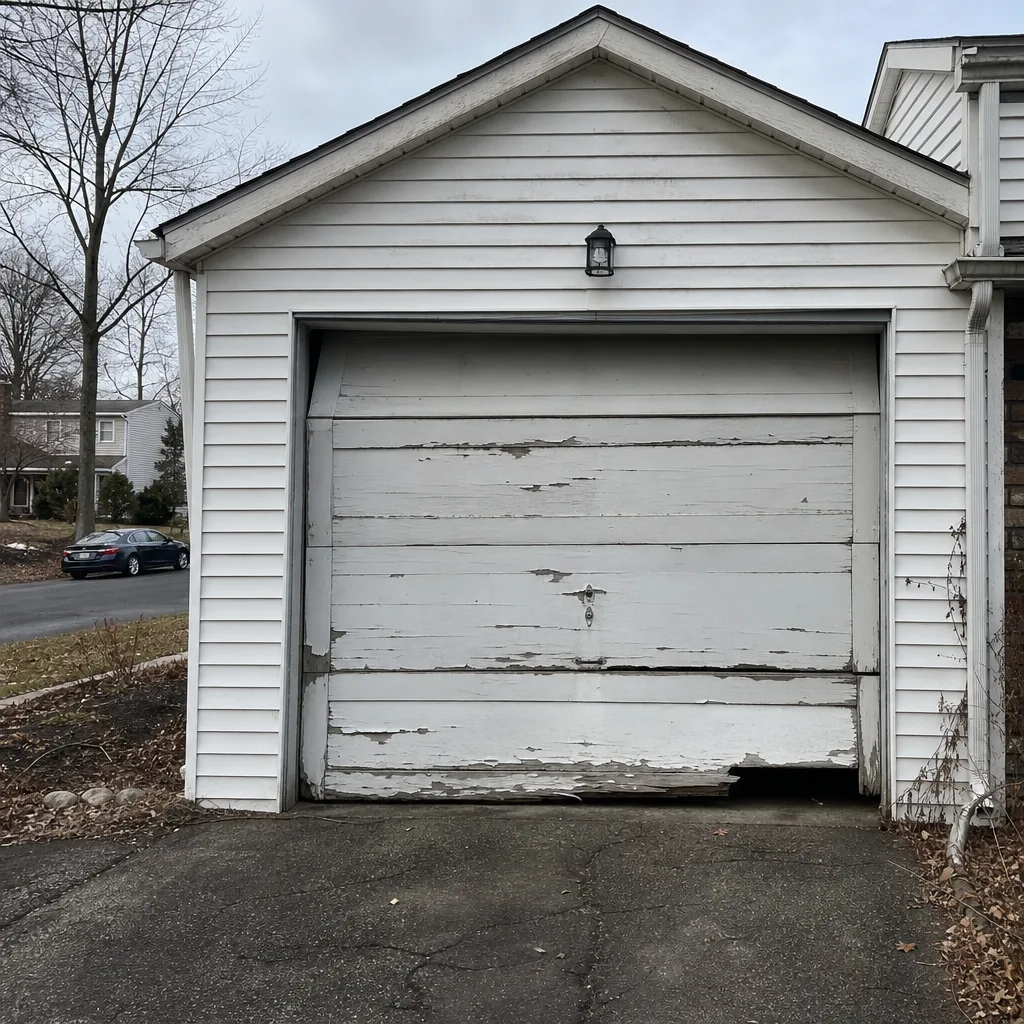 Before
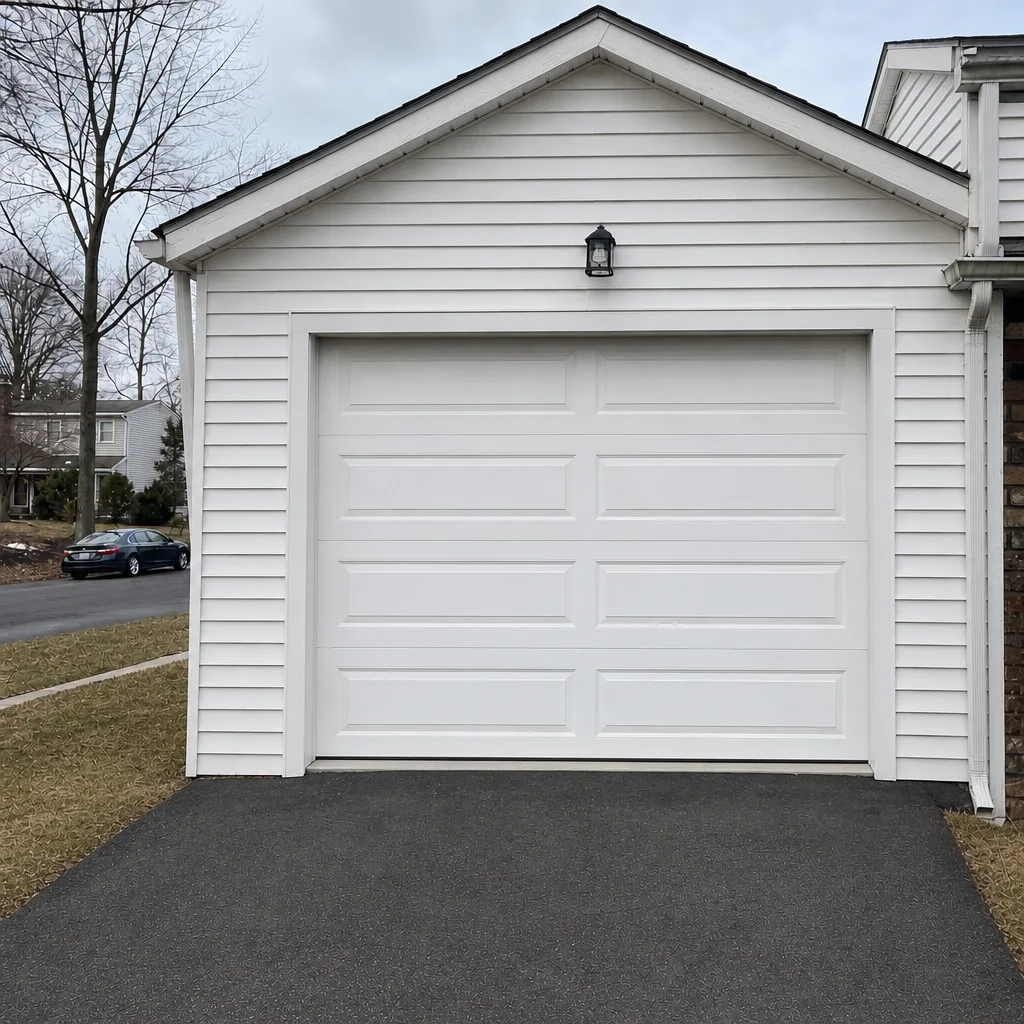 After
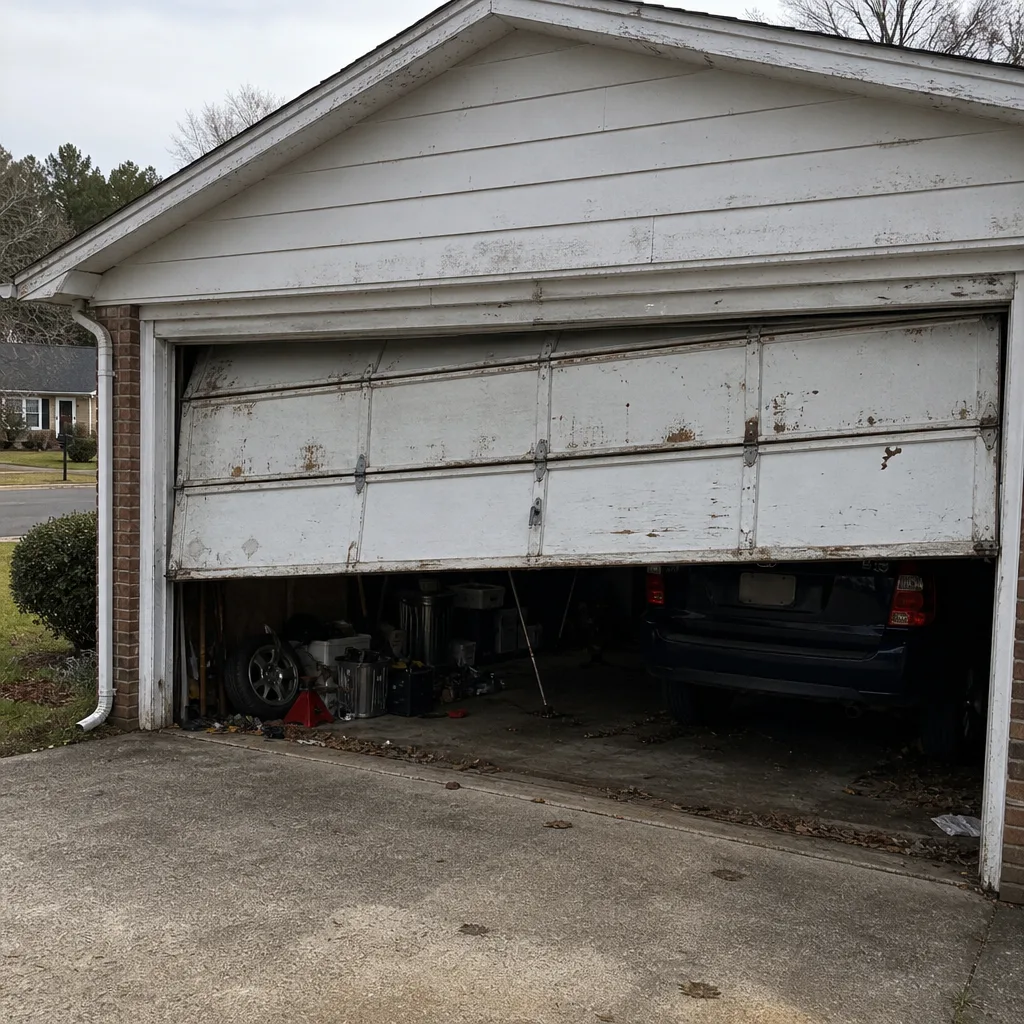 Before
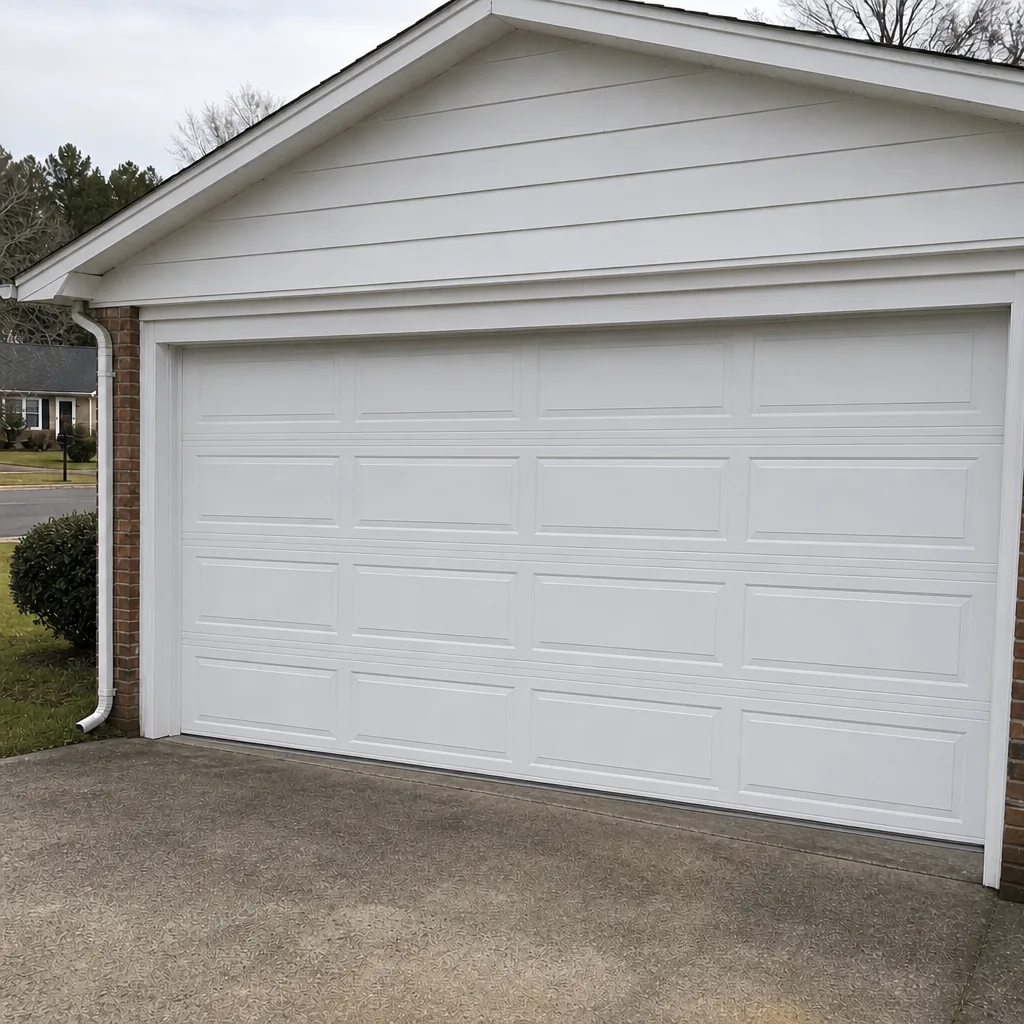 After
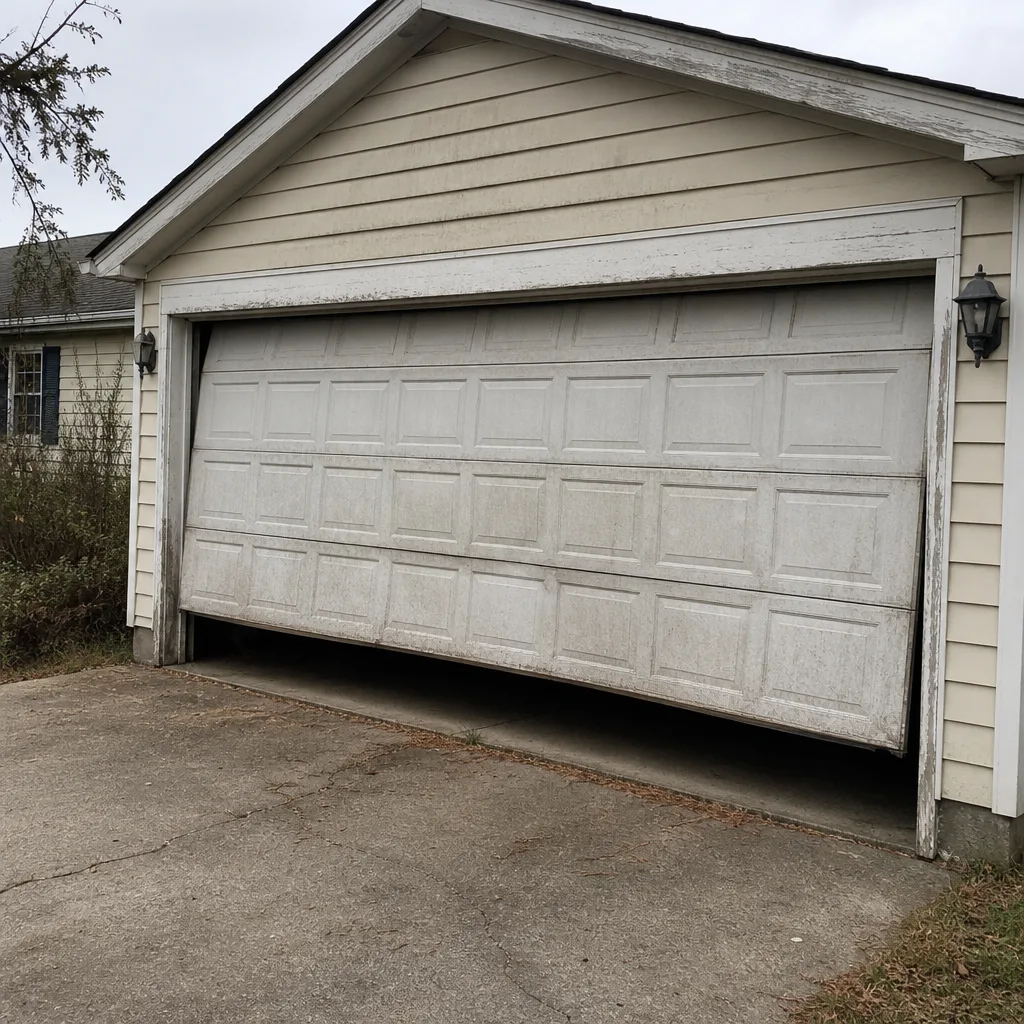 Before
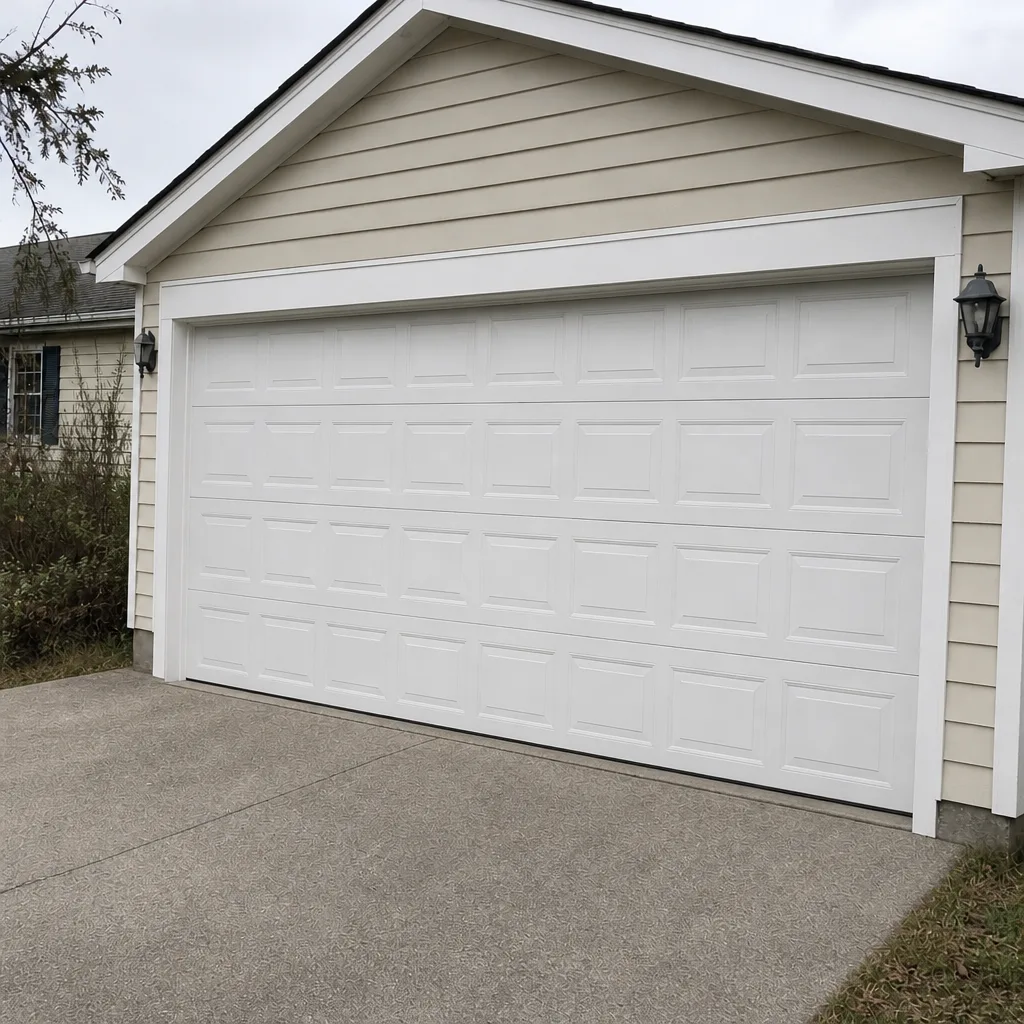 After
When to Call a Professional
Call a professional when the spring is broken, gapped or stretched, when the door is sagging or out of square, when the cables are frayed, when the opener runs but the door won’t move, or when a door won’t close properly and the safety reverse no longer works. Those are all safety or structural issues that a trained technician should handle, not a homeowner. Call sooner rather than later if the door is stuck open, since an open garage is a security exposure.
If you’re trying to decide between a repair and a replacement, that’s a good time for a professional assessment and a written price. Garage Door Repair Vernon offers free estimates in Vernon. Call (877) 492-3186. We answer 24/7. Fast dispatch from 7am to 7pm, Sunday through Friday, and we’re closed on Saturday. If a door fails on a Saturday, call and we’ll book you for Sunday. Same-day service is available when the schedule allows.
Frequently Asked Questions
Spring repair in Vernon typically runs $180 to $340 for one spring, and a matched pair is about twice that since the pair is usually replaced together. The written estimate sets the final price, and it’s agreed before any work starts. Call (877) 492-3186 for an exact quote. Estimates are free.
Same-day service is often possible for spring and opener repairs, depending on the schedule and the part needed. Call (877) 492-3186 and we’ll tell you the soonest opening. We answer 24/7, with fast dispatch from 7am to 7pm, Sunday through Friday.
Vernon’s freeze-thaw cycle is the reason. The temperature swings between freezing and above freezing repeatedly through winter, flexing the spring steel each time and speeding up fatigue beyond what a national lifespan estimate predicts. That’s why a pre-winter check makes sense here.
No. The price is set by the written estimate we give you after looking at the door, and that’s the price you pay. The estimate is quoted and agreed before any work starts. Call (877) 492-3186 to book a free estimate.
Repair it if a single part has failed, like one spring or an opener. Replace it if the panels, tracks or frame are structurally compromised, or if several parts are failing at once. A written estimate on both tells you which is cheaper over time. Call (877) 492-3186 for a free assessment.
The local professionals we connect you with are licensed and insured as their state requires, and they’re experienced with the brands already in your garage. Our technicians have up to 12 years of experience. For a free estimate, call (877) 492-3186.
The Bottom Line
A garage door in Vernon lives a harder life than national guides account for. The freeze-thaw cycle wears springs faster, road salt from the Route 44 and I-84 corridors attacks the bottom section, and humid summers stress wood and seals. The right decisions follow from that: check springs before winter, keep the bottom seal intact, compare installed prices rather than flat ones, and choose brands someone local will actually service. And when a spring, cable or opener fails, that’s a trained-professional job, not a weekend project. One call, full solution, from a snapped spring to a brand-new door.
Call (877) 492-3186 for a free estimate. We answer 24/7. Fast dispatch from 7am to 7pm, Sunday through Friday.
Written by the team at Garage Door Repair Vernon.