
Last updated November 22, 2026
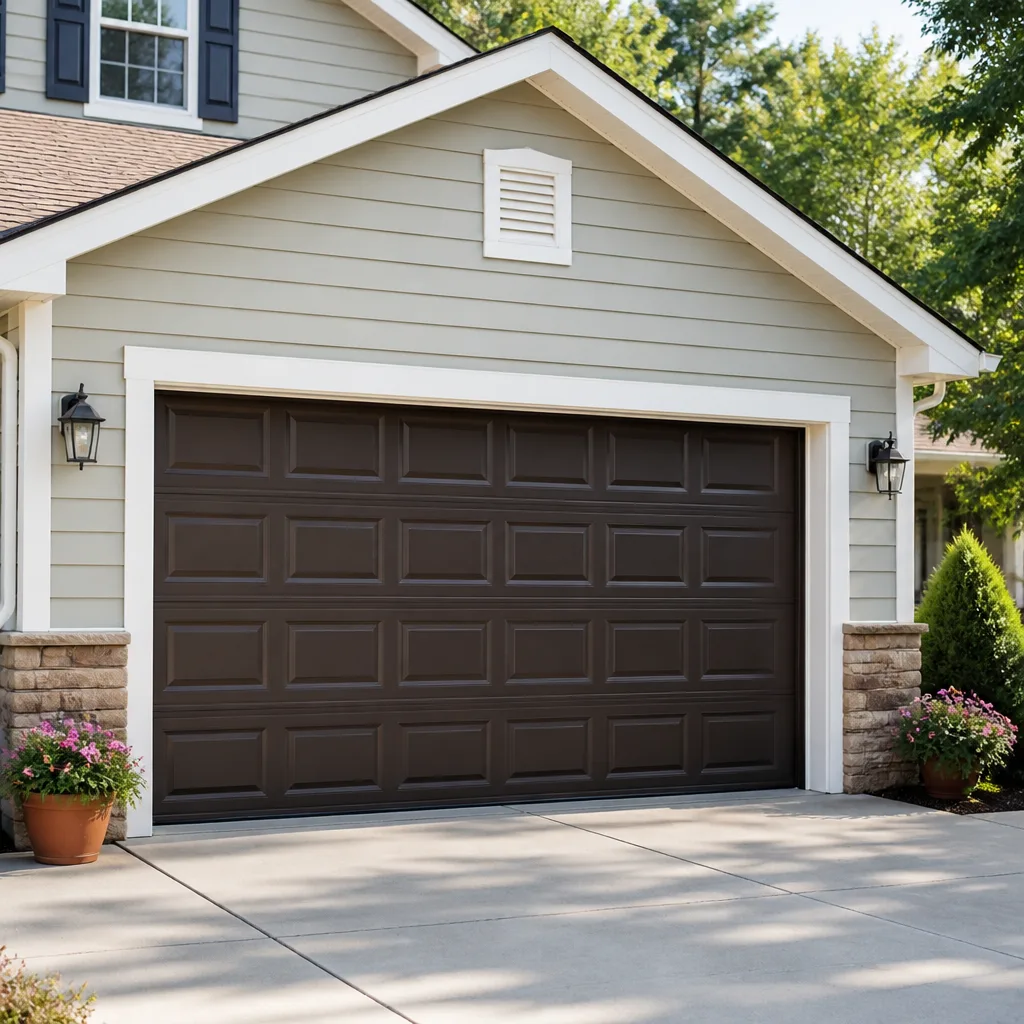 Raised-panel steel
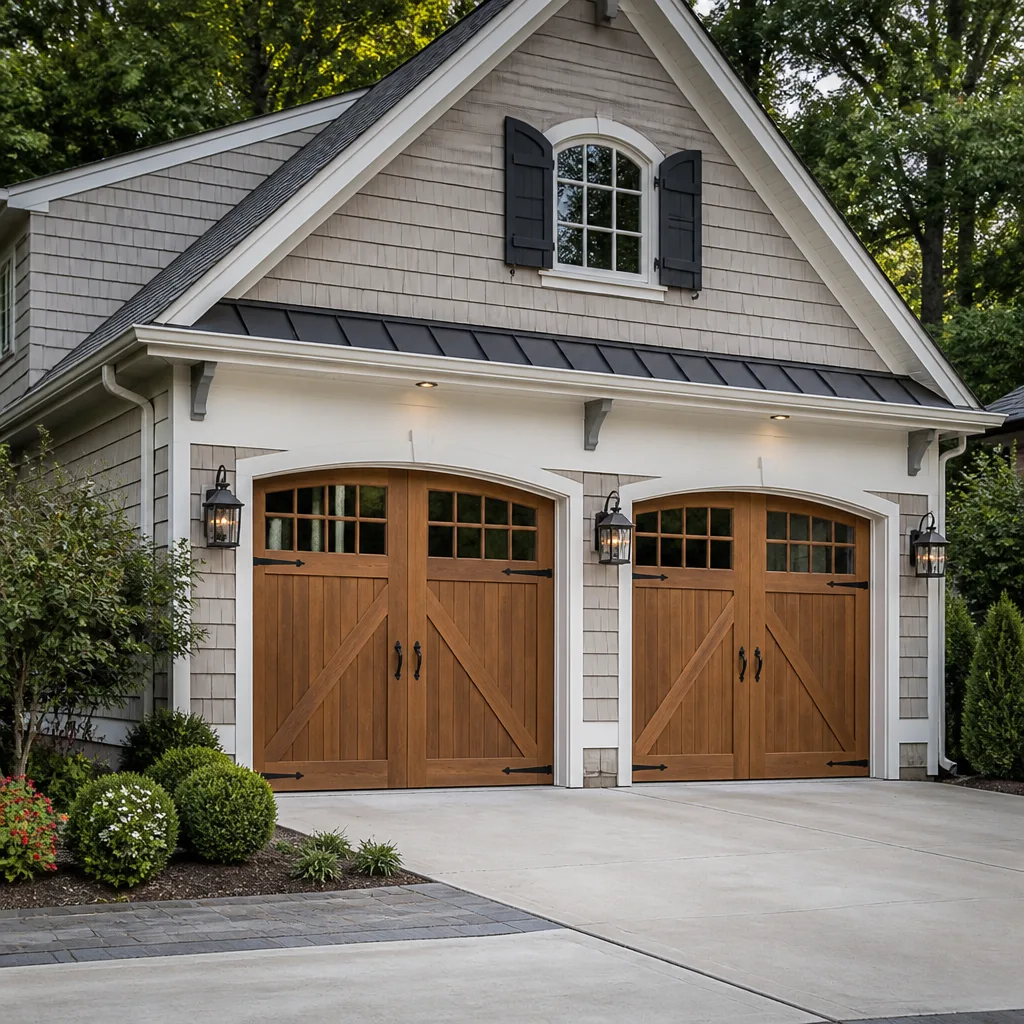 Carriage house
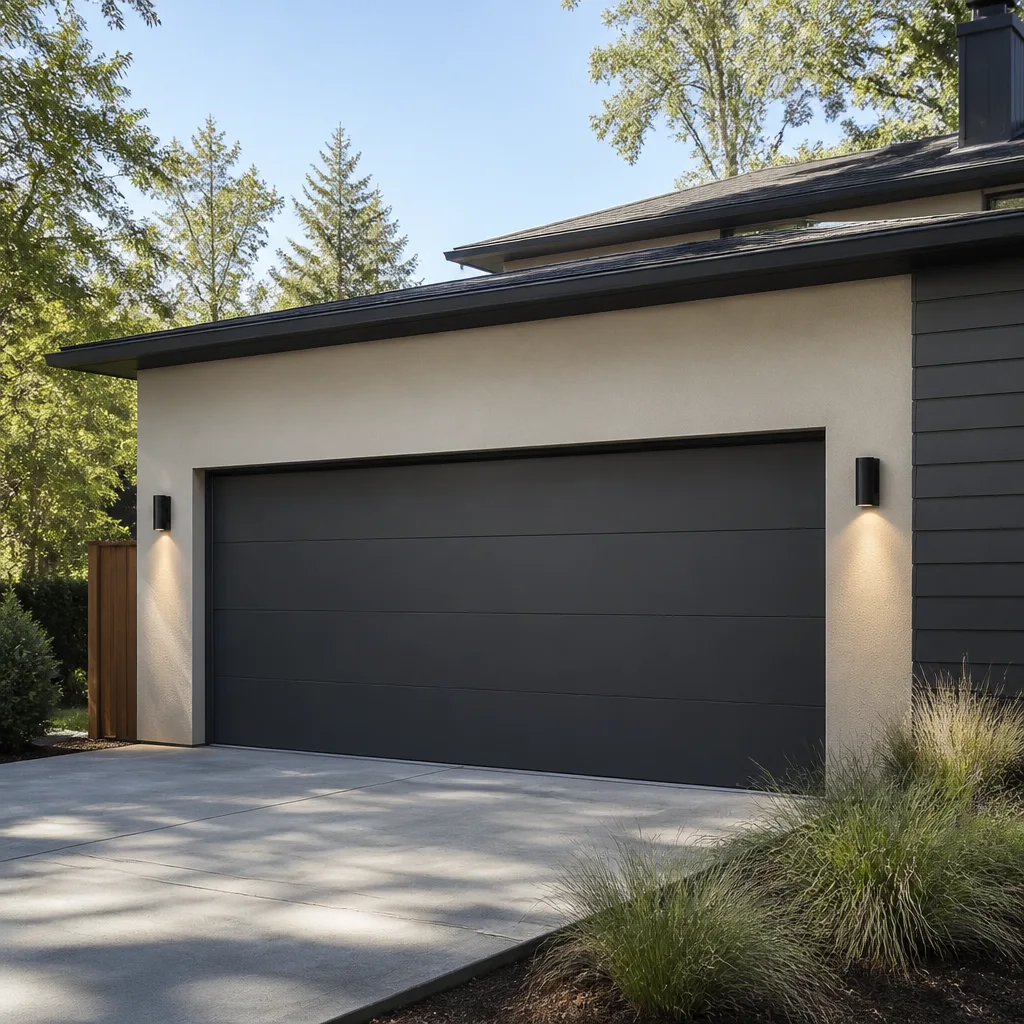 Modern flush
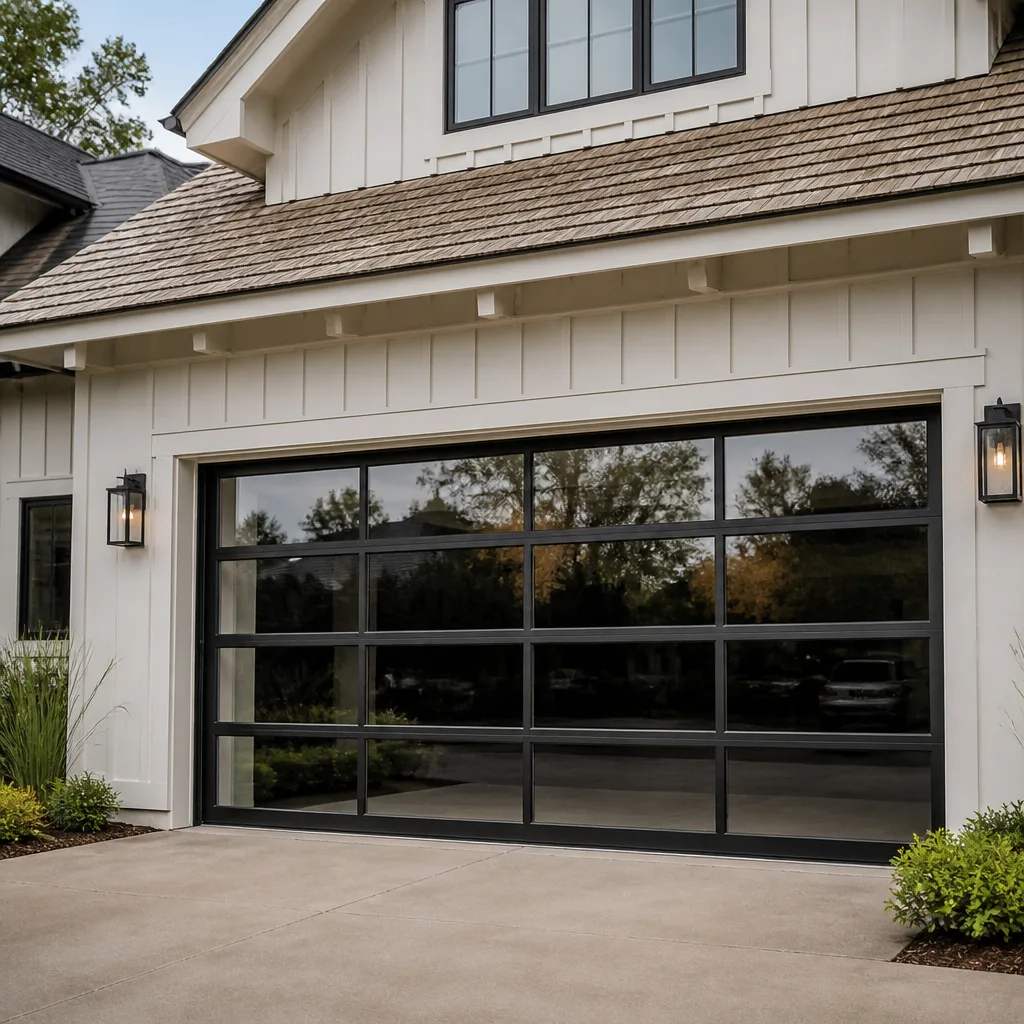 Full-view glass
 LiftMaster openers
 Chamberlain openers
Full 25-point door and opener safety check with every visit - springs, cables, rollers, tracks, and your LiftMaster or Chamberlain opener included
You get a price before we start. It does not change when the pro arrives.
Get your free estimateDIY vs Professional Garage Door: The Vernon Homeowner’s Decision Guide
Spring replacement sends hundreds of homeowners to emergency rooms across the country each year, and most of them are not careless people. They are handy people. The torsion spring above a garage door stores an enormous amount of energy, and it releases that energy in an instant when a winding bar slips. That is the part most DIY guides leave out. This guide breaks garage door work down task by task – what is genuinely safe to handle yourself in a Vernon garage, what carries real injury risk, and where the warranty and insurance math makes self-service a losing deal even for someone who owns every tool.
Quick Answer
You can safely DIY the low-risk work on a Vernon garage door: lubrication, sensor alignment, track cleaning, and remote or keypad programming. You should not DIY torsion or extension spring replacement, cable work, or drum replacement, because those parts store dangerous stored energy and a mistake can injure you. Professional help is also the smarter call when a repair affects opener warranties or homeowner liability, and when a door needs full replacement.
Styles & brands we work with
- Raised-panel steel
- Carriage house
- Modern flush
- Full-view glass
- LiftMaster openers
- Chamberlain openers
Table of Contents
- The honest split: what’s safe to DIY and what isn’t
- Why springs and cables are a different category of risk
- How DIY spring work affects your warranty
- Cost comparison: DIY versus professional, tools included
- Connecticut liability: what happens when a DIY repair fails
- The middle path: buy the part, let a technician install it
- When a repair turns into replacement
- Vernon context: climate, housing, and door wear
The Honest Split: What’s Safe to DIY and What Isn’t
The DIY question is not about how handy you are. It is about which specific tasks on a garage door carry injury risk or warranty consequences that make a self-service job a net negative even for someone who has rebuilt an engine. We’ve seen plenty of capable homeowners get this right on the safe tasks and wrong on the dangerous ones.
Here is the split, task by task.
- Safe to DIY: Lubricating rollers, hinges, and tracks with a garage-door lubricant. Cleaning the photo-eye sensors and lining them up so the beam connects. Reprogramming a remote or keypad. Wiping down and visually inspecting the door panels twice a year.
- Safe with care: Tightening loose hinge and bracket bolts. Straightening a slightly bent track with light hand pressure. Replacing a rubber bottom seal if the door is fully down and stable.
- Not safe to DIY: Torsion spring replacement. Extension spring replacement. Cable replacement. Drum replacement. Bracket removal near a wound spring. Any attempt to adjust spring tension.
- Professional by default: Opener motor or logic board replacement, full door replacement, and panel replacement on a heavy insulated door.
That third category is where the real decision lives. Everything above it can be handled on a Vernon driveway with a Saturday afternoon and a can of lubricant. Everything in it puts stored mechanical energy in your hands, and that is a different thing to manage than a stuck bolt.
If your door is stuck, crooked, or making a cracking sound from the springs, treat it as a repair call, not a project. Our garage door repair service covers exactly those situations, and a technician can tell you in minutes whether it’s a spring, a cable, or an opener fault.
Why Springs and Cables Are a Different Category of Risk
A fully wound torsion spring stores an enormous amount of energy, and that energy releases in milliseconds when a winding bar slips or a cable gives way. This is not a matter of being careful enough. It is a matter of the part holding more force than any tool in a homeowner’s box was built to manage.
Torsion springs sit on a shaft above the door and counterbalance the door’s weight. Extension springs run along the horizontal tracks on each side. Both work by storing force, and both are under load any time the door is even partway up. That is why the danger isn’t only during the repair. A spring that is half-failed, a cable with a frayed strand, or a bent drum can let go while the door is moving on its own.
Here’s what a professional spring job actually involves:
- Secure the door so it can’t move while the spring is under load.
- Measure the old spring’s wire gauge, inside diameter, and length so the replacement matches the door’s weight.
- Use a proper winding bar set to relieve tension in controlled steps.
- Remove and replace the spring, then rewind it to the correct number of turns for the door.
- Test the door’s balance and travel, and check the opener’s force settings afterward.
Step three is where homeowners get hurt. A winding bar that slips under load is not a small event. If you’re in Vernon and your door has snapped a spring, leave it down and call us rather than reaching for a bar. Our garage door spring repair handles both torsion and extension springs as a safety-critical procedure, not a quick swap.
The same caution applies to the door opener. A door that’s been running on a broken spring strains the opener motor every time it cycles. If you’ve been running it anyway, the opener may already be damaged – our garage door opener repair can diagnose that alongside the spring.
How DIY Spring Work Affects Your Warranty
Most opener warranties and some door warranties include language that ties coverage to professional installation and service. If you replace a spring yourself and the opener fails a month later, the manufacturer can point to the unqualified repair as the reason. That’s the language to look for before you start.
Warranty documents vary by brand and model, but the phrases that matter usually look like this:
- “Installed by a qualified technician” or “professionally installed” – this is the line that makes DIY installation a coverage problem.
- “Alteration or repair by unauthorized persons” – this typically voids the warranty on the part or system it touches.
- “Improper installation or adjustment” – a broad clause that a manufacturer can use if a spring or opener setting was changed outside spec.
- “Consequential damage” exclusions – if a bad spring job damages the opener motor, the opener warranty may exclude that damage even if the opener itself is under warranty.
In practice, a DIY spring job risks three warranties at once: the spring (if the part was bought without warranty coverage for self-install), the opener (if it was strained or the force settings were changed), and in some cases the door itself. A homeowner with a LiftMaster or Chamberlain opener has a warranty document that is specific about who can service the system. If you bought a Clopay door, the same rule may apply to panel or hardware replacement.
Read the warranty before you pick up a tool. If the document uses “qualified technician” or “professional installation” language, the repair is not a DIY candidate. We work on the brand already in your garage – LiftMaster, Chamberlain, Genie, Clopay, and others – so the service stays inside the manufacturer’s terms.
Cost Comparison: DIY Versus Professional, Tools Included
The true cost of a DIY spring job is not the price of the spring. It’s the spring plus the tools you’ll use once, plus the risk of a warranty claim, plus the cost of a professional repair if the DIY attempt fails. Most homeowners don’t run that math.
Here’s a typical comparison for a torsion spring replacement on a single-car door:
- Spring part: $40-$90 for a matched pair of standard torsion springs.
- Winding bar set: $30-$60. This is the tool that makes the job possible and dangerous at the same time. Most homeowners use it once.
- Safety glasses and gloves: $20-$40 if you don’t already own them.
- Professional spring replacement (one spring): $180-$340 typical, with a matched pair usually about twice that.
On paper, a DIY spring job is $90 to $190 in parts and tools versus a professional repair. But add the risk: a failed DIY attempt often means the door is stuck open or down, the opener is strained, and the eventual pro repair includes both the spring and the opener diagnostics. That swings the math decisively toward professional work on the spring and cable jobs, and toward DIY on the harmless stuff.
The calculator flips entirely for low-risk tasks. A can of garage-door lubricant costs $10-$15 and handles a season of maintenance. A replacement photo-eye sensor costs $20-$40 and takes ten minutes to align. A new remote is $25-$50. Those are real DIY wins, and we tell homeowners so.
The one job that never makes DIY sense is door replacement. A new door has to be measured, ordered, and installed to fit the opening, and a mis-sized door can’t be corrected with a trip to the hardware store. If you’re at that stage, call us for a free measure and a written estimate. The price is set before any work starts, so there’s no surprise on the invoice.
Connecticut Liability: What Happens When a DIY Repair Fails
If a DIY garage door repair fails and injures someone, your homeowner’s insurance coverage can depend on how the work was done. Policies differ, but the general principle is that work performed by a qualified person is treated differently than work performed by the homeowner outside the scope of ordinary maintenance.
The key questions an adjuster or insurer will ask:
- Was the work within the homeowner’s ordinary maintenance? Lubrication and sensor alignment usually qualify. Spring and cable replacement usually doesn’t.
- Was the work performed by a qualified person? A professional service with a written record answers this cleanly. A self-installed spring does not.
- Did the failure result from improper installation or adjustment? This is where DIY spring work becomes a coverage problem. A spring wound to the wrong tension or a cable installed backward is exactly the kind of thing a claim investigation will look for.
- Was the injury to a household member, a visitor, or a contractor? Coverage for a guest injured by a falling door may depend on whether the door was known to be in disrepair.
This matters in Vernon because a lot of local housing has older doors with hardware that’s already near the end of its service life. A door that’s been running on a stretched spring for a year is a liability before anyone touches it. If you’re a landlord or property manager responsible for a rental in Vernon, that risk is yours to manage, not the tenant’s.
None of this is legal advice, and your policy language is the authority. But the pattern is consistent: professional work on the dangerous components keeps the liability branch of the decision simple. We can work with your insurer if a claim ever comes up, and we provide a written record of the repair.
The Middle Path: Buy the Part, Let a Technician Install It
There is a category of garage door work where buying the part yourself and having a technician install it saves money without adding safety risk. This is the sweet spot most DIY-versus-professional articles skip.
Here’s how it works:
- Identify the failed part – a remote, a wall button, a photo-eye sensor, a bottom seal, a set of rollers, or a hinge.
- Confirm the exact model number, usually printed inside the opener housing or on the door’s hinge plate.
- Buy the replacement yourself if you can find the correct OEM part at a fair price, especially for older or discontinued model openers.
- Have a technician install it. Installation is quick, and the technician can check the rest of the system while they’re there.
The savings are real on parts because the homeowner isn’t paying a markup, and the safety risk is low because the part isn’t spring or cable hardware. The rule of thumb: if the part could move the door under its own force, it’s a professional install. If it’s electronics, seals, or hardware that bolts on without touching a wound spring, the middle path works.
Brand-specific diagnostics matter here. A Genie or Craftsman opener that’s behaving strangely may need a specific logic board revision, not a generic replacement. Technicians who work on the dominant smart and legacy platforms – LiftMaster, Chamberlain, Genie, Craftsman – can identify the right part for your specific opener model before anything is ordered. That saves the return-and-reorder cycle that eats the savings on DIY.
When a Repair Turns Into Replacement
Some doors are past the point where repair makes sense. A door that has failed springs, bent tracks, worn rollers, rotting bottom sections, and a struggling opener all at once is a replacement candidate. The repair math changes when you’re looking at four or five separate fixes versus one new door.
Here’s how to tell when you’re on the replacement side of the line:
- The door is more than roughly 15 to 20 years old and showing rot, rust-through, or panel separation.
- Repairs are stacking up – a spring fails, then a cable, then a roller set, all within a few months.
- The opener is straining to lift a heavier door than it was rated for (common after an insulated door is installed on an older opener).
- The door is unsafe to operate: it drops when released partway up, or the panels flex visibly during travel.
- You want an insulated door for a garage that’s used as a workshop or living space.
A replacement job is measured, ordered, and scheduled – it’s not a same-day repair. The right sequence is a free measure, a written price, and a scheduled install. We install Clopay, Amarr, Wayne Dalton, and Raynor door lines, and we measure the opening and the door’s weight before anything is ordered so the new door fits the first time.
If you’re not sure which side of the line you’re on, that’s a good reason to get a technician out. A fifteen-minute look at the door will tell you whether the next $200 goes into repair or into a replacement plan.
Vernon Context: Climate, Housing, and Door Wear
Vernon’s winters are the biggest single driver of garage door wear in the area. Freeze-thaw cycles work on the door’s steel, the tracks, and the spring hardware through a season of expansion and contraction. A spring that’s near the end of its cycle count in October is often the one that fails in January, and a door that’s been running on old rollers in the cold will tell you so with a groan every morning.
The housing stock matters too. Many Vernon homes have doors that were installed decades ago and have been serviced only when something broke. On those doors, the springs may be original, the rollers may be flat-spotted, and the opener may be an older model that predates current safety features. Working on a door like that is not the same as working on a five-year-old door.
Three local patterns we see:
- Cold-morning spring failures. The spring that’s going to break usually does so on the first genuinely cold morning of the season. If your door makes a sharp crack and stops moving, that’s the spring, and it isn’t a DIY job.
- Salt and road grime on the bottom seal. The rubber seal at the bottom of the door takes the worst of winter road spray and often fails before the rest of the door. That one is a reasonable DIY replacement.
- Opener strain after a door replacement. A homeowner who installs a heavier insulated door on an older opener is asking the opener to lift more than it was rated for. Have the opener checked when the door is replaced.
If you’re in Vernon and you’ve been putting off a spring or cable repair, the safe call is to stop using the door and get a technician out. The garage door is the largest moving object in most homes, and it’s also the entry point for vehicles, tools, and household access. When the door won’t move, we move fast – that’s why emergency service is a core part of what we do, not an add-on.
Common Mistakes to Avoid
- Trying to adjust spring tension to “fix” a door that won’t stay up. That’s a symptom of a failing spring, and adjusting it without the right tools is the exact scenario that sends people to the ER. Replace it, don’t tweak it.
- Running the opener on a broken spring. The opener will try to lift the full weight of the door with no counterbalance, and it will burn out the motor or strip the gear. Stop using the door until the spring is fixed.
- Buying a generic spring off the shelf. Springs are matched to the door’s weight by wire gauge, inside diameter, and length. A spring that’s “close” will fail early or strain the opener.
- Assuming a new opener fixes a door problem. If the door is heavy, binding, or off-track, a new opener inherits the same problem. Diagnose the door first, then the opener.
- Ignoring the photo-eye sensors. A door that closes and then reverses is usually a sensor alignment issue, not an opener failure. Ten minutes of cleaning and alignment often solves it.
- Patching a rotted bottom section instead of replacing it. The bottom section is where the seal rides, and a patched section won’t hold the seal. On an older Vernon door, replacement of the section is usually the right call.
- Skipping the warranty read before a DIY repair. If the opener is a LiftMaster or Chamberlain unit still under warranty, a DIY spring job can void the coverage you paid for. Read the document first.
See the difference
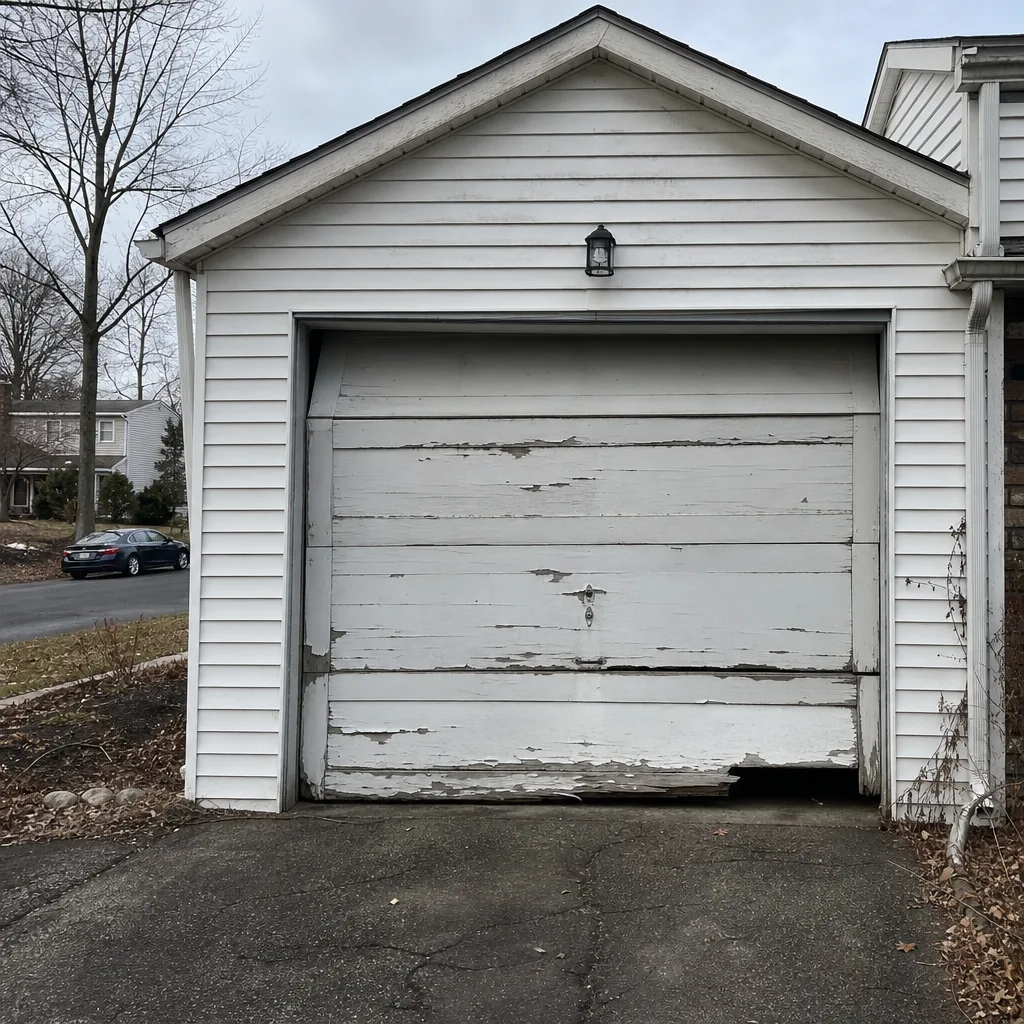 Before
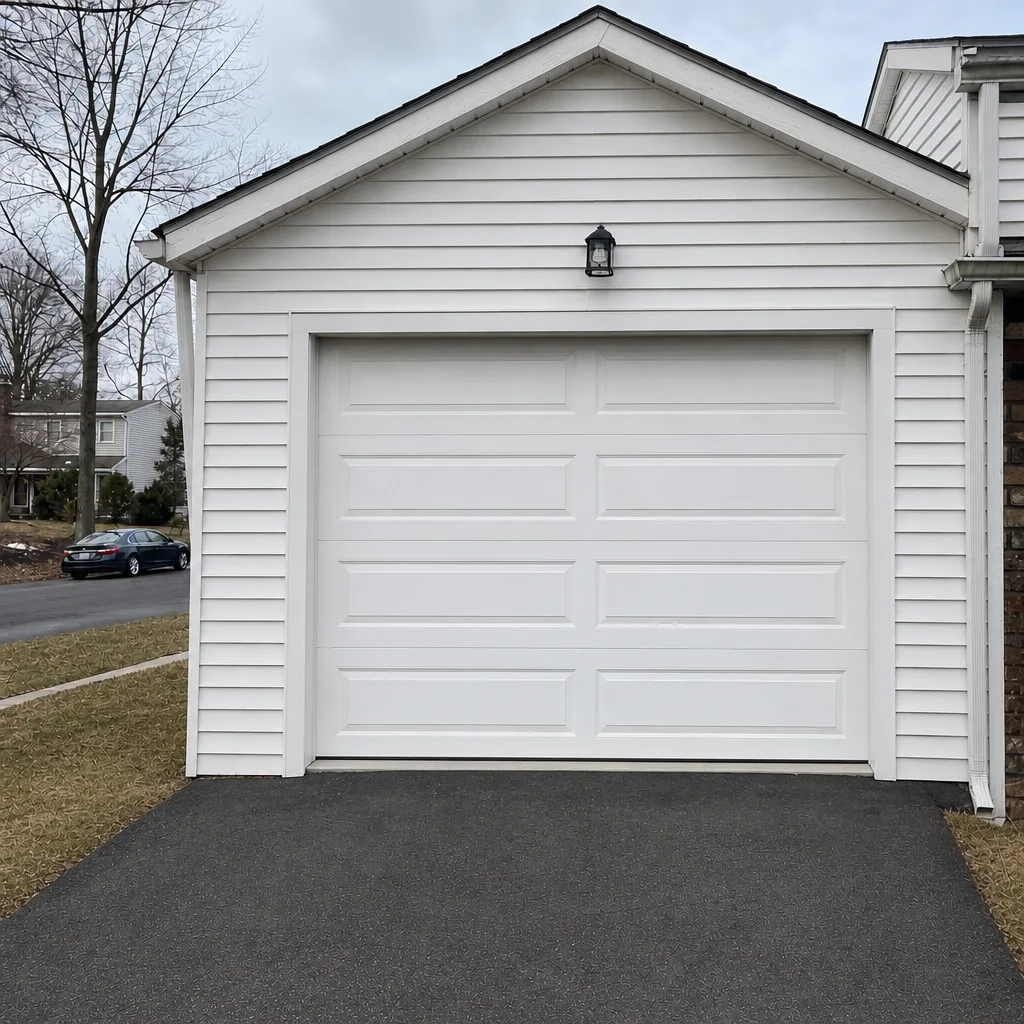 After
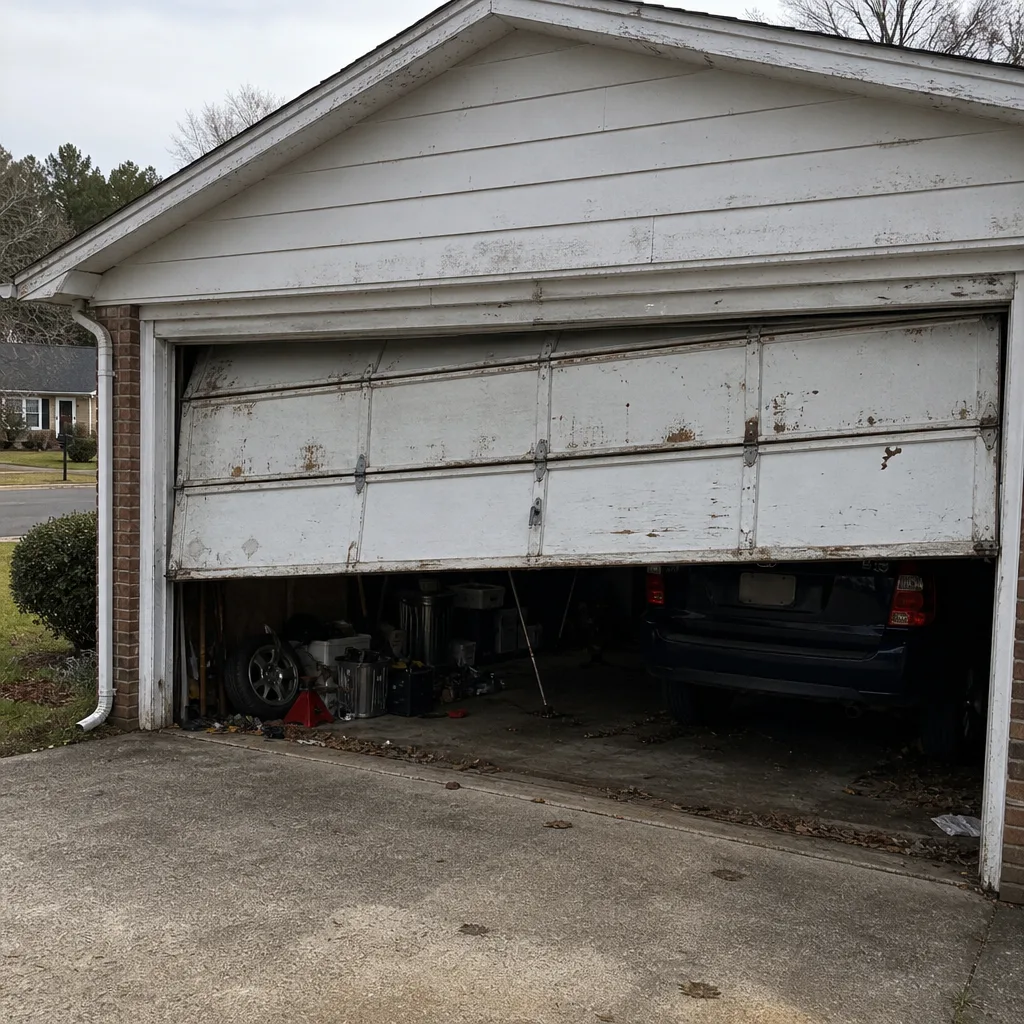 Before
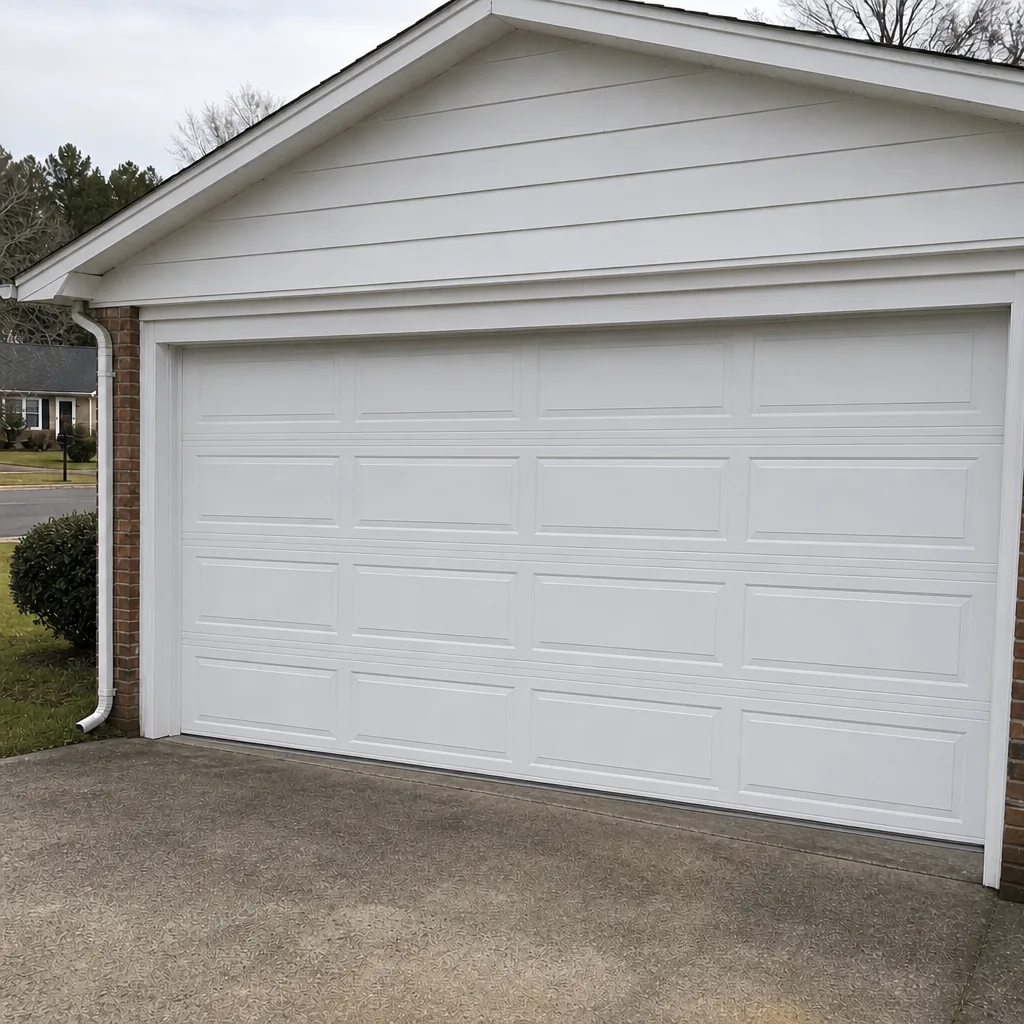 After
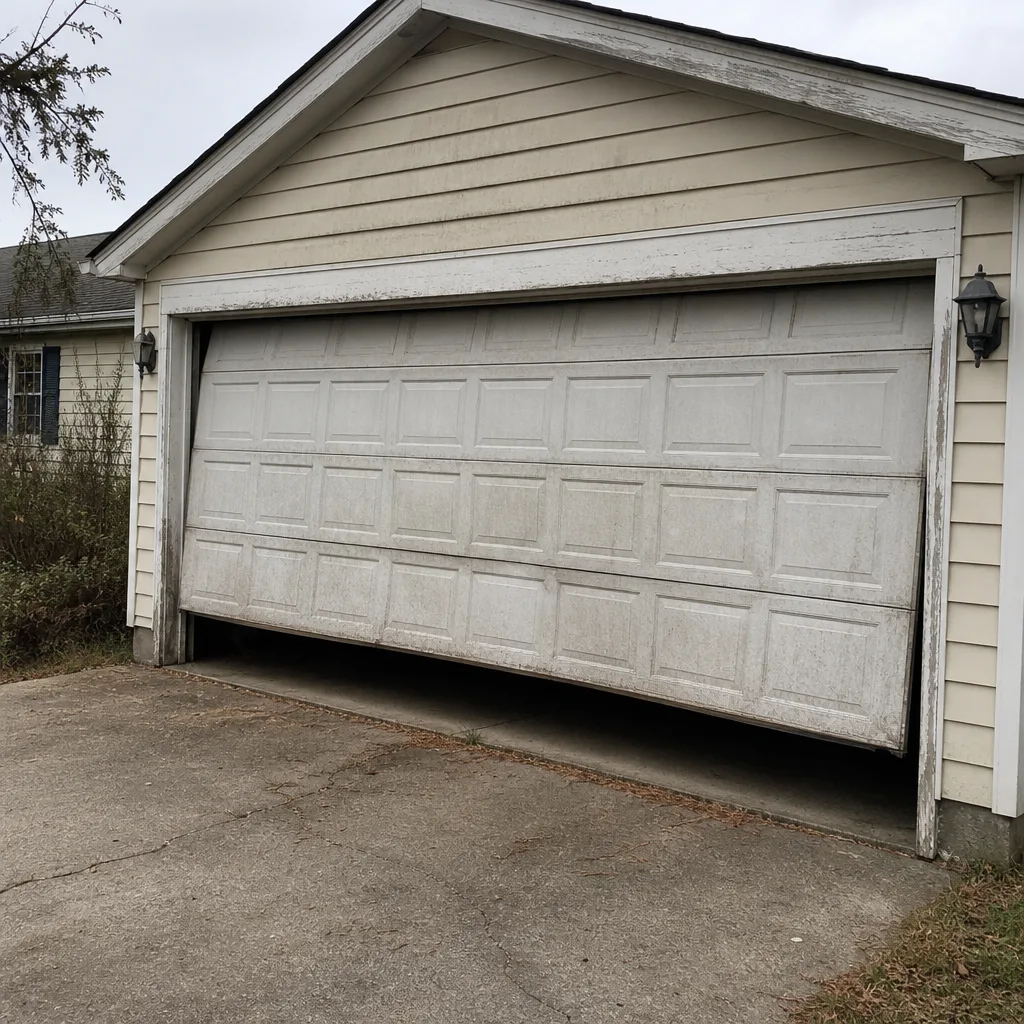 Before
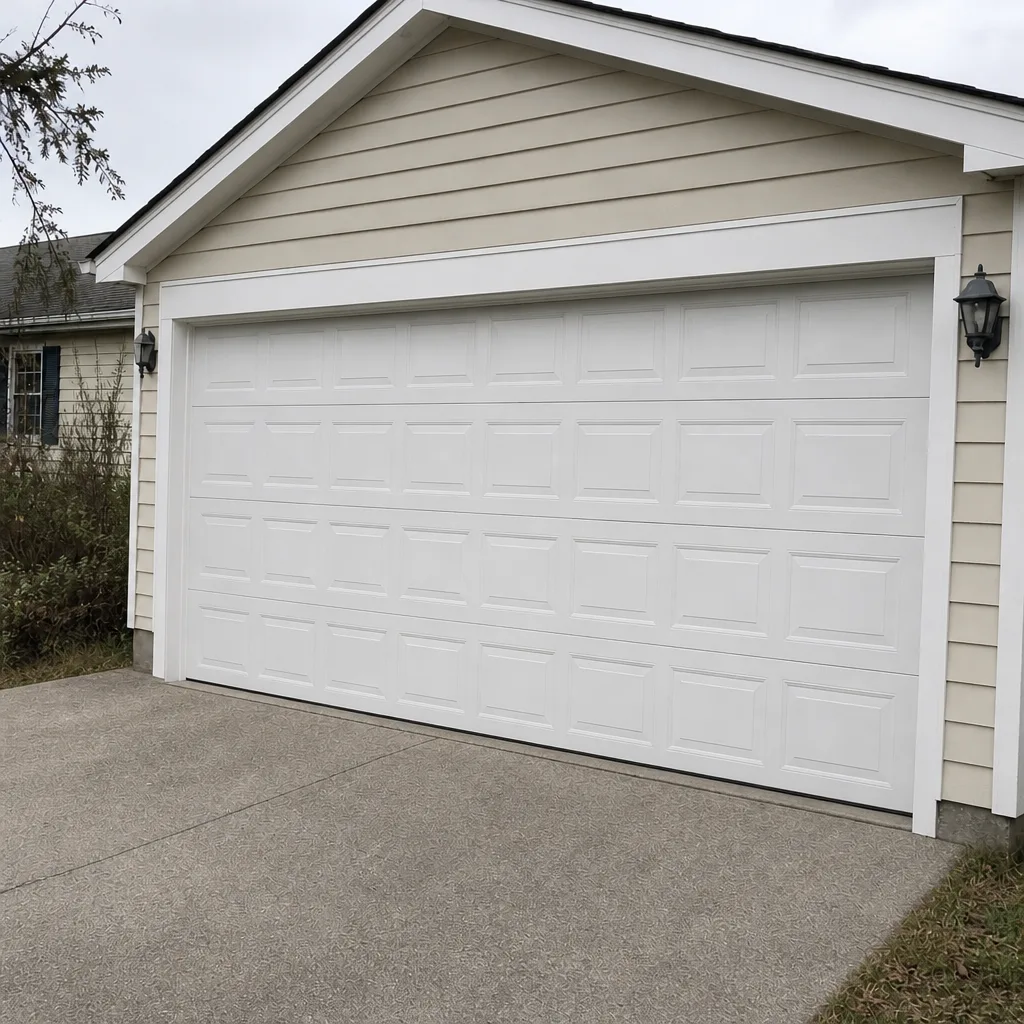 After
When to Call a Professional
Call a professional for any spring, cable, or drum work, for any door that drops or binds during travel, and for any opener that’s straining or making a new noise. Call for a door that’s off-track, a panel that’s cracked or separated, and any replacement decision on a door that’s more than a decade old. If you’re a landlord or property manager in Vernon, call for annual inspections of the doors under your care so a failure doesn’t become a liability claim. If your door has failed and you can’t get a vehicle out, that’s an emergency call.
Garage Door Repair Vernon offers free estimates in Vernon – call (877) 492-3186. We answer 24/7. Fast dispatch from 7am to 7pm, Sunday through Friday. Our technicians have up to 12 years of experience, and we work on the brand already in your garage.
Frequently Asked Questions
You should not replace a garage door torsion or extension spring yourself. A wound spring stores enough force to cause serious injury if a winding bar slips, and most opener warranties require professional service. Call a technician for spring work and handle only lubrication, sensors, and remotes on your own.
It can. Most opener warranties use language like “installed by a qualified technician” or exclude repairs by “unauthorized persons,” and a DIY spring job can void coverage on the opener and sometimes the door. Read your warranty document before starting any repair that touches spring or opener hardware. Call (877) 492-3186 if you want a technician to check the system instead.
Lubrication, photo-eye sensor cleaning and alignment, remote and keypad programming, hinge tightening, and bottom seal replacement are safe for most homeowners. Anything that involves a spring, a cable, or a drum is not. The dividing line is whether the part stores energy that could move the door on its own.
Spring repair in Vernon typically runs $180-$340 for one spring, and a matched pair is usually about twice that. The written estimate sets the final price, and it’s agreed before any work starts. Call (877) 492-3186 for a free estimate.
It depends on the policy language and whether the work was done by a qualified person. Work outside ordinary maintenance, like spring or cable replacement, is more likely to be questioned in a claim. Professional service with a written record keeps that question simple. We can work with your insurer if a claim comes up.
Yes, same-day service is available for repair calls in Vernon. We answer 24/7, and fast dispatch runs from 7am to 7pm, Sunday through Friday. A call outside dispatch hours is booked into the next opening. Call (877) 492-3186 for an exact quote – estimates are free.
The Bottom Line
The DIY-versus-professional question on a garage door isn’t about skill. It’s about which tasks carry injury risk or warranty consequences that make self-service a bad deal even for a capable homeowner. Lubrication, sensors, remotes, and seals are safe and worth doing yourself. Springs, cables, drums, and anything that touches a wound spring belong with a technician. Add up the tool cost, the warranty risk, and the Connecticut liability question and the math is clear on the dangerous jobs. On the safe jobs, DIY wins. If you’re not sure which side of the line a repair sits on, call us for a free estimate.
Call (877) 492-3186. We answer 24/7. Fast dispatch from 7am to 7pm, Sunday through Friday, and the price is quoted and agreed before any work starts.
For the full picture of what we do across repair, opener work, springs, and installation, start with Garage Door Repair Vernon.
Written by the team at Garage Door Repair Vernon.